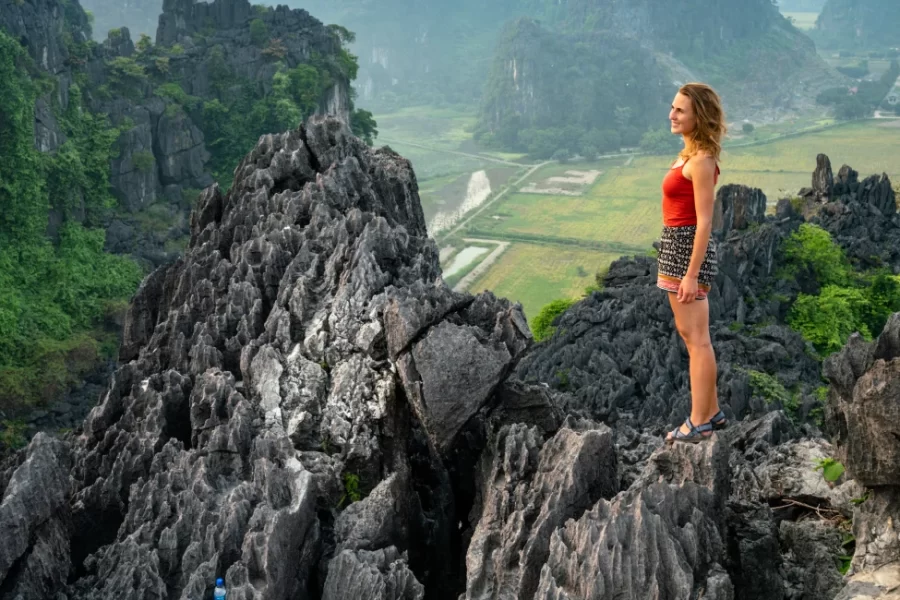
A photographer’s lookbook of the most cinematic corners of the Last Shangri-La — dzongs, high passes, hidden valleys — mood-matched, not ranked.
The Introduction——————————————–

Bhutan does not photograph the way other destinations photograph. It rewards patience over spectacle, weather over weather-apps, and couples who are willing to walk uphill to earn a frame. Prayer flags shred the sky into ribbon, mist folds itself around fortress walls, and the whole country moves at the tempo of a monastery bell — which means the best pre-wedding photographs made here feel less like a shoot and more like a ceremony that happened to be witnessed.

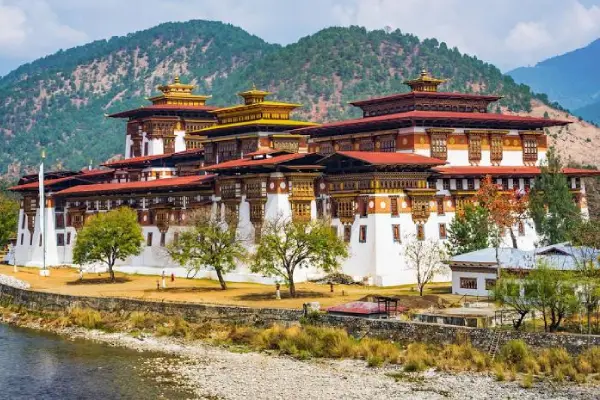
What follows is not a ranked list. It is a curated tour of ten locations across Bhutan, including Paro, Punakha, Thimphu, Bumthang, Phobjikha, Haa, Trongsa, and the scenic mountain passes between them. Whether you’re planning a Bhutan tour, a romantic honeymoon, or a destination pre-wedding shoot, this guide is designed to help you discover the country’s most photogenic landscapes. Read it like a lookbook rather than a leaderboard. Every couple I have shot in Bhutan has a different pulse, and the best pre-wedding shoot locations in Bhutan are the ones that match that pulse, frame for frame. Read slowly. Shortlist the ones that feel like you.
—————————
The Bhutan Portfolio
Ten frames across one kingdom.
01
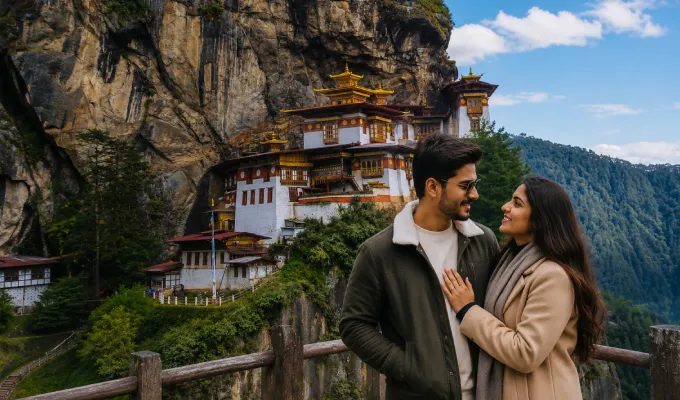
Sacred
Golden hour : Mid-morning, 9–10:30am
02
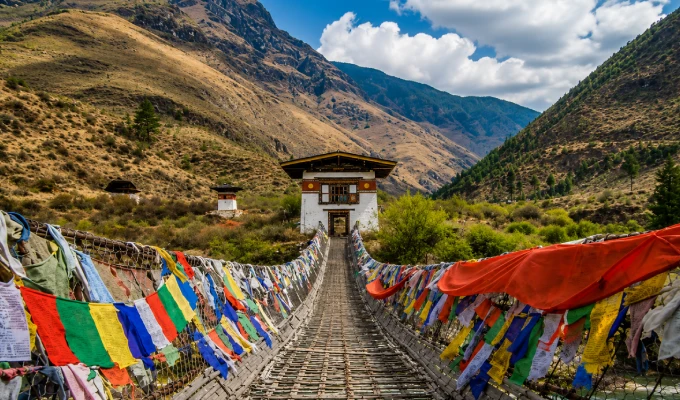
Regal
Golden hour · 3:30–5pm, afternoon light
Ethereal
Golden hour · 7–8:30am, before the mist lifts
03
Wild
Golden hour · First light, 6:15–7:30am
04
Dochula at 7:12am
Featured Frame-------------------- Dochula at 7:12am — 108 chortens, and the eastern Himalaya rehearsing behind them.
05
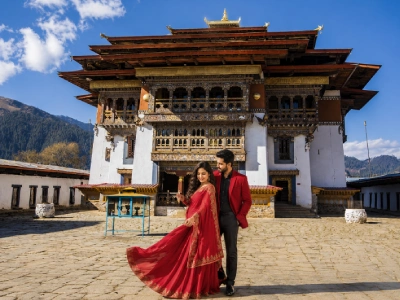
Regal
Golden hour · 5:30–6:30pm, evening flood-light
06
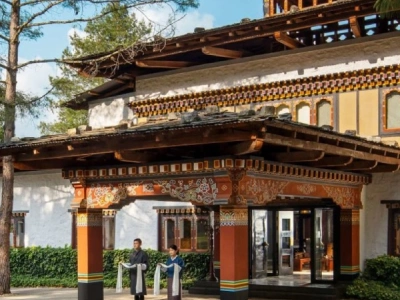
Intimate
Golden hour · Late afternoon, 4–5:30pm
Sacred
Golden hour · Morning, 7–9am
07
Wild
Golden hour · Sunrise, 6–7:15am
08
Featured Frame-------------------- Dochula at 7:12am — 108 chortens, and the eastern Himalaya rehearsing behind them.
09
Regal
Golden hour · Late afternoon, 4–5:30pm
10
Intimate
Golden hour · Blue hour, 5:45–6:30pm
Matching Your Love Story to a Bhutan Frame

Choose by the mood of your story, not the mood of the algorithm.

After a decade of shoots across the Himalayan belt, I have learned that Bhutan is not one location — it is four moods carried in one passport. Four moods, four shortlists.
Planning Notes for Bhutan

Visas, permits, light, and altitude.

Bhutan is a permitted-tourism country, and every international visitor pays a daily Sustainable Development Fee (currently USD 100/night for non-regional travellers, INR 1,200/night for Indian passport holders) on top of hotels and transport. Every itinerary must be booked through a licensed Bhutanese tour operator — there is no self-drive, no walk-in visa, no shortcut. Build this into the budget from the first conversation.

The romance of golden hour is a moving target in the Himalaya. Taktsang shoots between 9 and 10:30am when the east-facing cliff is finally lit; Punakha rewards 3:30–5pm; Dochula opens only if you are on the pass by 6:45am. For every location on your shortlist, scout the exact hour, the exact direction of the sun, and the exact spot — a shot list written six weeks ahead saves the whole trip.

Dzongs and lhakhangs are living religious institutions, not backdrops. Interior photography inside monasteries is forbidden almost everywhere; courtyard and exterior shoots inside a functioning dzong require a written permit from the Department of Culture, arranged 72 hours in advance by your operator. Modest attire is non-negotiable — long sleeves, ankle-length skirts, no exposed shoulders — even for the couple.

And whenever possible, hire a Bhutanese photographer or a travelling one who has scouted the country in the same season. They know which side of Punakha Dzong catches the last sun, which Phobjikha ridge track keeps you clear of the crane wetland, and which Paro farmhouse will open its hearth for a blue-hour frame. Local light knowledge is worth every extra invoice line.

Your Story, Your Frame

“Bhutan doesn't just photograph well — it photographs slowly, and that is exactly why the album, opened a decade from now on a rainy afternoon, still feels alive.”

Shortlist two or three of these Bhutan frames that match the mood of your love story, not the mood of a trend. That is how a pre-wedding shoot becomes a keepsake instead of a post.
Not sure which destinations to include?
Read our Top Tourist Places to Visit in Bhutan guide for the must-see attractions and unforgettable experiences across Bhutan.

Planning your trip? Here’s a complete guide on how to reach Bhutan.

Best Hotels To Stay In Bhutan
Hotel Category Price/Night Best For
COMO Uma Paro Luxury ⭐⭐⭐⭐⭐ ₹45,000+ Honeymoon
Zhiwa Ling Heritage Heritage ₹22,000+ Couples
Dhensa Boutique Resort Boutique ₹18,000+ Nature
Gangtey Lodge Luxury ₹55,000+ Scenic Stay
Farm Homestays Budget ₹2,500+ Local Experience
here to Stay in Bhutan:

Discover the Beauty of Bhutam

Bhutan Honeymoon Package 7 Nights 8 Days

Bhutan Honeymoon Tour Package 6 Nights 7 Days

Want this itinerary tailored to your dates?

Share your travel window and we will send you a personalised plan within 24 hours.

Frequently Asked · Bhutan

The first two hours after sunrise and the final ninety minutes before sunset. Bhutan sits in a deep Himalayan trough, so light drops fast behind ridgelines — a Punakha frame that sings at 4:45pm is flat by 5:20. For Dochula and Chele La, sunrise is non-negotiable; the peaks veil by 9am on all but the clearest winter days.
Interior and courtyard photography inside every functioning dzong — Tashichho (Thimphu), Punakha, Paro Rinpung, Trongsa, and Wangdue — requires a paid permit from the Department of Culture, arranged 72 hours in advance through your licensed Bhutanese tour operator. Monastery interiors (Taktsang, Kurjey, Jambay Lhakhang) are strictly off-limits for photography. Passes, valleys, and private farmhouses need no state permit, but farmhouse shoots need the owner’s written consent.
Two windows. March–May gives you rhododendrons on Chele La, jacarandas at Punakha, and lush green valleys — with the trade-off of afternoon cloud. October–early December is the classic frame: sharp Himalayan visibility at Dochula, black-necked cranes at Phobjikha, cobalt skies over Punakha, and cold-crisp light everywhere. Avoid June–August monsoon and January’s deep-freeze at altitude.
Four to six months, minimum. The tour operator books the visa (issued only against a confirmed itinerary), the Sustainable Development Fee, all internal transport, permits for dzong access, and — critically — the hotels in Punakha, Paro, and Bumthang, which have limited inventory in peak season. Add another month if you want a specific heritage farmhouse or the Bumthang flight.