
- Between the Indus and the Changthang, a bed is never just a bed. It is the altitude you wake to, the drum you hear at six, the stove someone lit before you asked. Choose it well and the mountains do the rest.
- Quick Snapshot
- Major monasteries to prioritize: 6 (Thiksey, Hemis, Alchi, Lamayuru, Spituk, Shey)
- Best time to visit: May – September, or during monastery festivals (June–July)
- Entry fees: ₹30 – ₹100 per monastery, most under ₹50
- Festival months: June (Hemis Tsechu), July (Lamayuru masked dances vary by year)
- Dress code: Modest, shoulders and knees covered, shoes off inside prayer halls
Iconic Cliffside Monasteries
- Two monasteries define the postcard image of Ladakh — tiered white-and-ochre buildings stacked up a hillside, gompas that look less built than grown out of the rock.
-
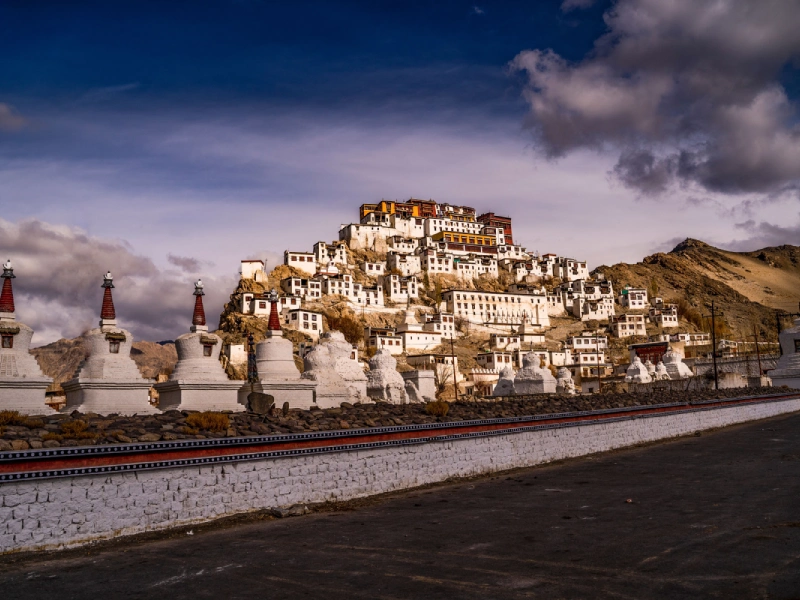
Thiksey Monastery
Thiksey Monastery, about 19 km from Leh along the Indus Valley, is often compared to the Potala Palace in Lhasa for its stepped, twelve-story structure climbing the hillside. Inside sits a two-story statue of the Maitreya Buddha, gilded and unmistakable the moment you enter the hall. Morning prayers here start early — arrive around 6:30 AM and you'll catch monks chanting over horns and drums, a ritual most day-trippers miss entirely by sleeping in. Beyond the main hall, the rooftop views over the Indus Valley are reason enough to make the drive.
-
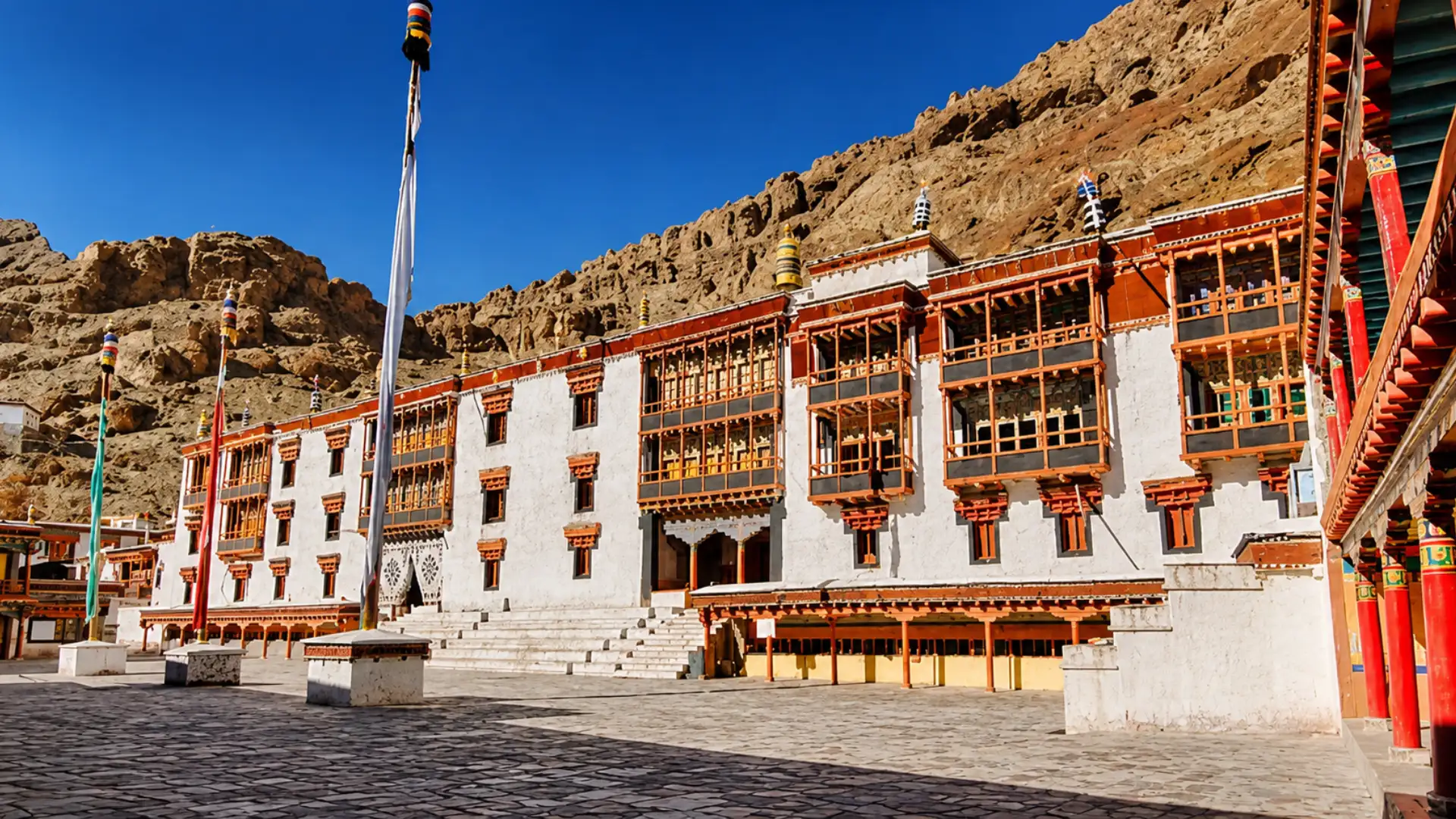
Hemis Monastery
Hemis Monastery, roughly 45 km from Leh, is the largest and wealthiest monastery in Ladakh, tucked into a side valley that keeps it sheltered and quiet outside festival season. It belongs to the Drukpa lineage and holds a genuinely significant collection of thangkas, statues, and stupas made of gold and silver. The monastery's real claim to fame, though, is the Hemis Tsechu festival each June — a two-day event of masked cham dances performed by monks in elaborate costumes, commemorating the birth of Guru Padmasambhava. Once every twelve years, a giant thangka is unveiled that's said to cleanse those who see it of sin; the next unveiling is a genuine bucket-list event for practicing Buddhists and curious travellers alike.
Ancient & Historic Gompas
- If Thiksey and Hemis represent Ladakh's grandeur, Alchi and Lamayuru represent something older and stranger — art and landscape that feel like they belong to a different century entirely.
-
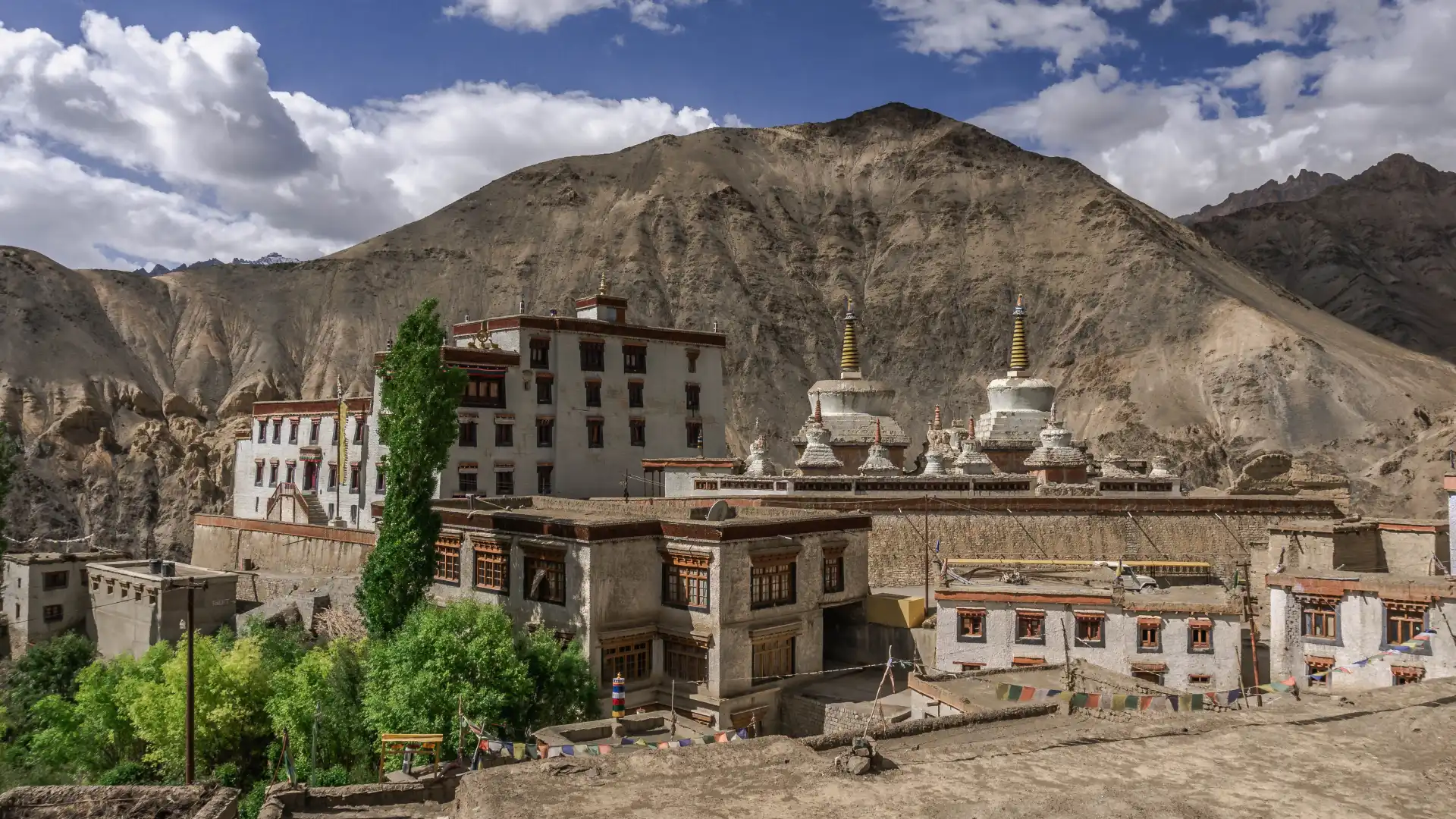
Alchi Monastery
Alchi Monastery, around 70 km from Leh in the Sham Valley, is unlike any other gompa in the region: it sits flat on the valley floor rather than clinging to a cliff, because it predates the fortress-monastery style that came later. Founded in the 11th century, Alchi is prized above all for its murals — intricate, Kashmiri-influenced paintings of Buddhist deities and mandalas that have survived nearly a thousand years largely untouched. Photography is restricted inside the main shrines specifically to protect these murals, which tells you how seriously their preservation is taken. Art historians consider Alchi one of the most important surviving examples of early Tibetan Buddhist painting anywhere in the world.
-
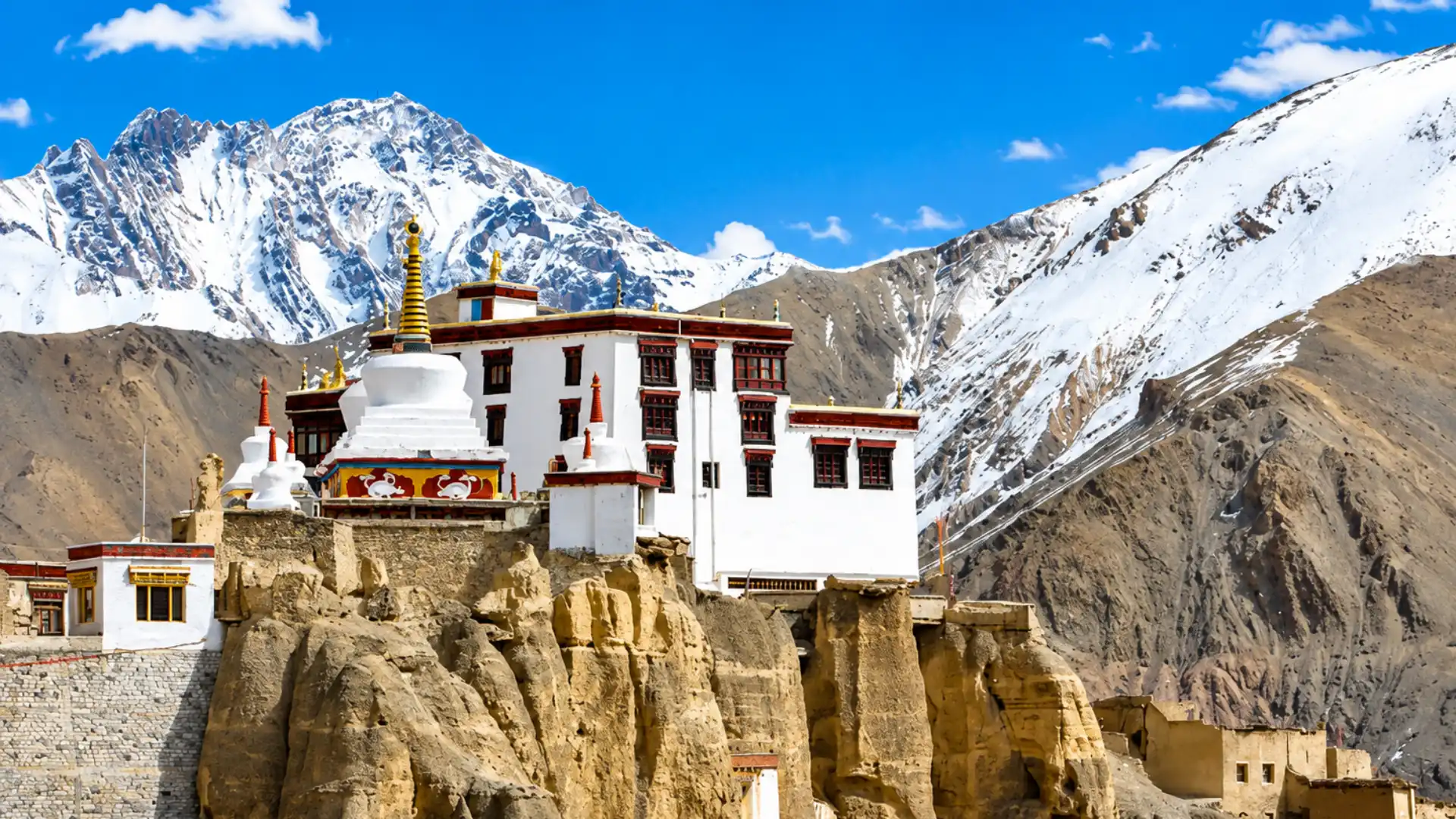
Lamayuru Monastery
Lamayuru Monastery, about 125 km from Leh on the road toward Kargil, is arguably Ladakh's oldest monastery, with roots said to stretch back over a thousand years. What makes Lamayuru unforgettable, though, isn't just the gompa — it's the landscape around it. The eroded, lunar-like terrain here has earned the nickname "Moonland," a jagged, otherworldly stretch of badlands that looks more like satellite imagery of another planet than anywhere in the Himalayas. The monastery itself, wedged into this landscape, hosts its own masked dance festival, and its remote position makes it one of the most atmospheric stops on any Ladakh monastery circuit.
Monasteries Near Leh
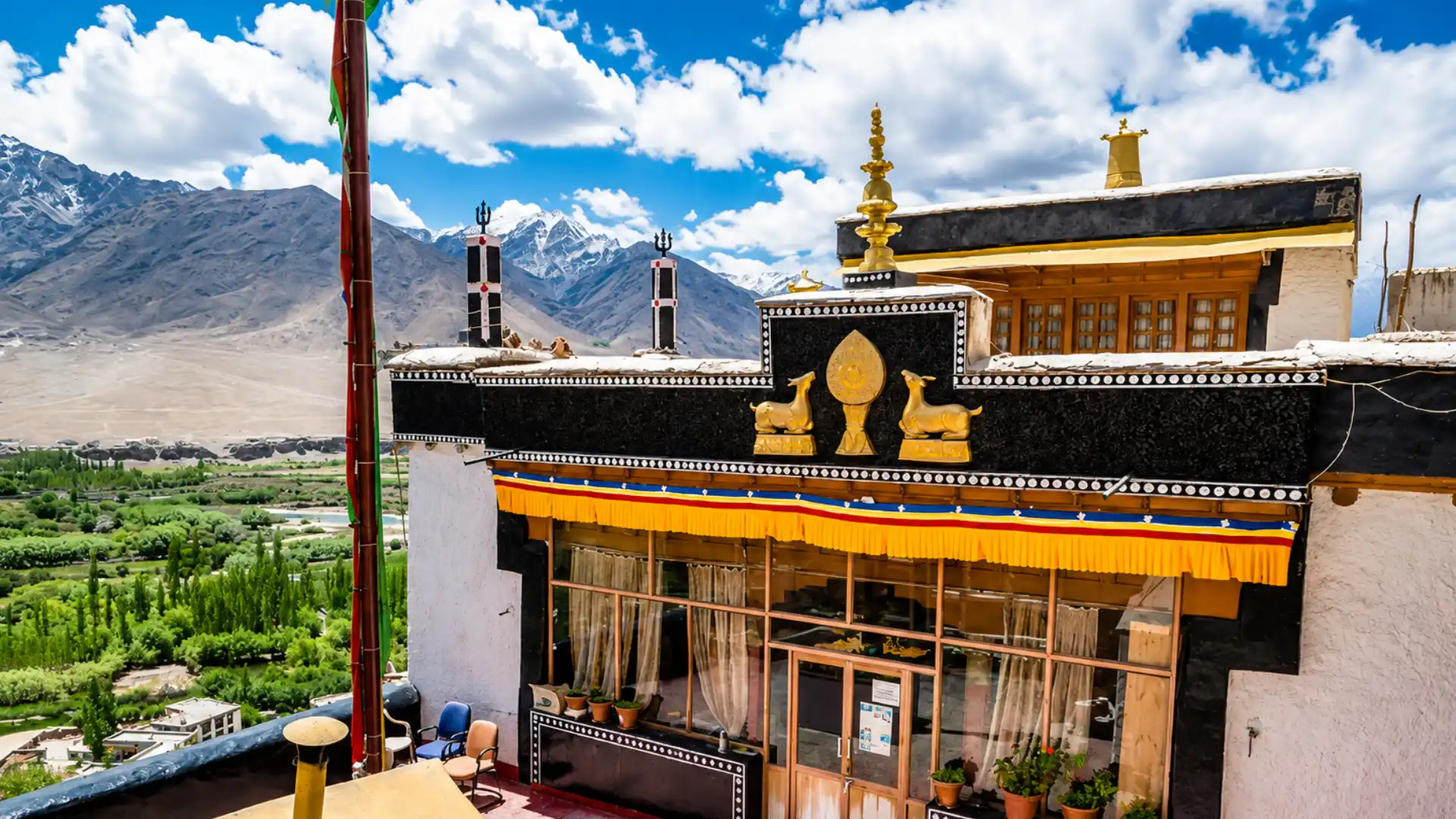
Not every gompa requires a full-day excursion. These two sit close enough to Leh to fit into a half-day, making them ideal for first-timers or anyone easing into the altitude before venturing further out.The first thing that hits you at Rumtek isn’t the architecture. It’s the silence inside the main hall. You climb the wide stone steps, slip off your shoes, and step into a room filled with the smell of juniper smoke and old wood. Light slants through high windows, falling on thangkas that seem to glow from within. Outside, the security check at the gate is your first clue that this isn’t an ordinary monastery — Rumtek is the seat-in-exile of the Karmapa, head of the Karma Kagyu lineage of Tibetan Buddhism.
-
Spituk Monastery
Spituk Monastery, just 8 km from Leh near the airport, belongs to the Gelug (Yellow Hat) sect and sits on a hill overlooking the Indus River. It's compact compared to Thiksey or Hemis, but its main hall houses a fearsome statue of Kali, unveiled only during the annual Spituk Gustor festival in winter. Its proximity to Leh makes it an easy stop on the way to or from the airport, or a gentle first outing on your acclimatisation day.
-
Shey Monastery
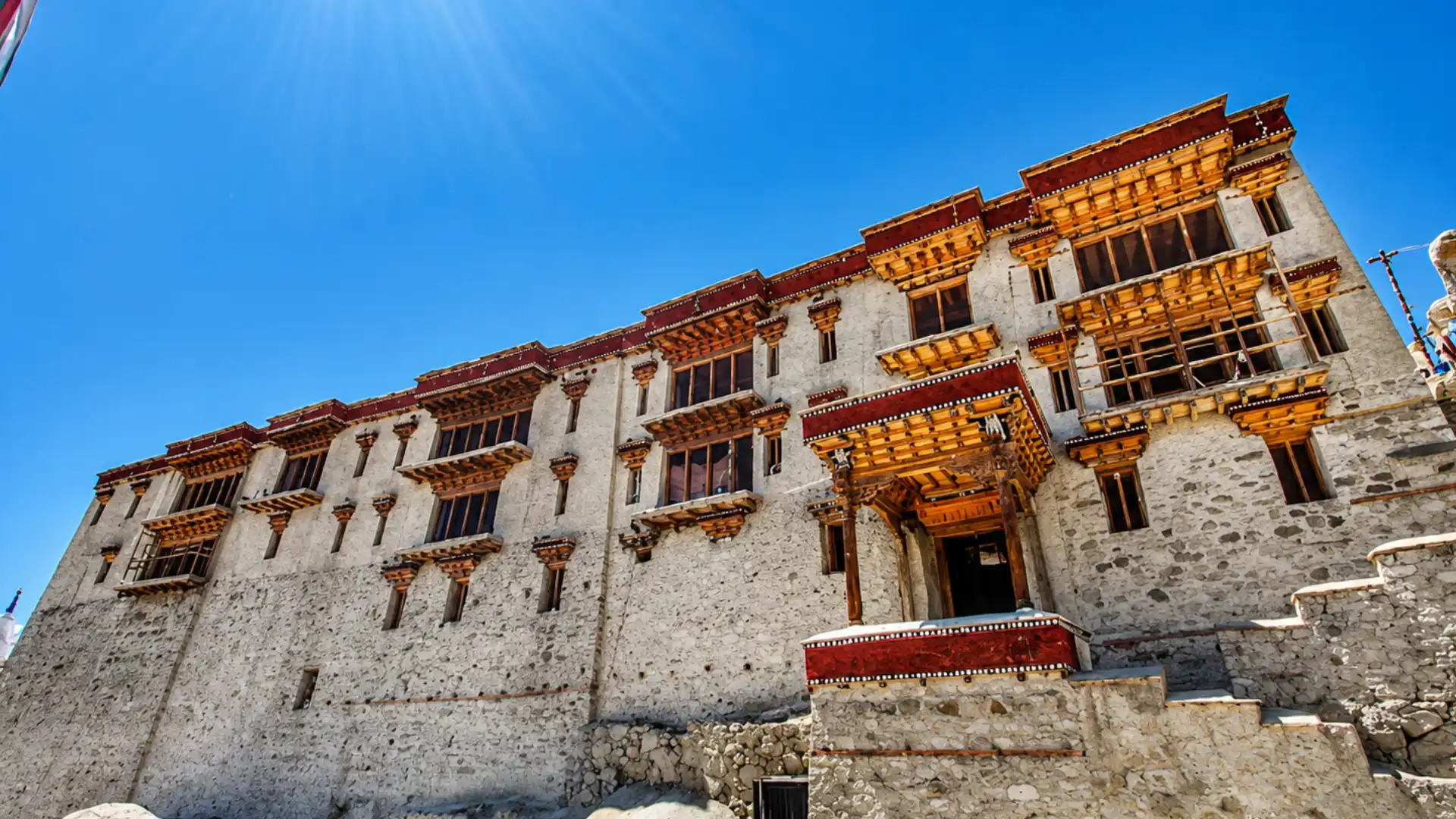
Shey Monastery and Palace, about 15 km from Leh, was once the summer capital of the Namgyal dynasty that ruled Ladakh. The monastery houses a striking 12-meter gilded copper statue of Shakyamuni Buddha, one of the largest of its kind in Ladakh, built using metal reportedly sourced from Zanskar, Nubra, and Baltistan. The adjoining ruined palace adds a layer of faded royal history to the visit, making Shey feel less like a single-purpose stop and more like a walk through Ladakh's political past alongside its religious one.
- Quick Fact: How to Plan Your Monastery Circuit
- Most visitors don't have time to see every gompa in Ladakh, so it helps to think in routes rather than a checklist.
- Short Leh Loop (1 Day): Spituk → Shey → Thiksey. All three sit along the same stretch of the Indus Valley within about 20 km of Leh, making this an easy half-to-full-day trip that doesn't require an overnight stay elsewhere.
- Sham Valley Extension (Add 1–2 Days): Extend the loop out to Alchi, and continue toward Lamayuru if you're already heading in the direction of Kargil or Zanskar. This route pairs naturally with a Sham Valley homestay stop, letting you combine ancient murals, lunar landscapes, and village hospitality in one arc.
- Festival-Timed Visit: If your dates are flexible, build the entire trip around Hemis Tsechu in June. Book Leh accommodation weeks in advance — this is one of the busiest tourist windows in Ladakh, and monastery festivals draw crowds well beyond the usual peak season.
Planning an East Ladakh spiritual circuit?
Pair Thiksey Monastery with Hemis and Shey Palace for a comfortable two-day monastery circuit based out of Leh. A reputable Ladakh monastery tour package can help arrange transportation, permits, and local travel logistics for a hassle-free experience.
- Ladakh Tour Package


Ladakh Honeymoon Tour Package 7 Nights 8 days

Ladakh Vacation Tour Package 4 Nights 5 days
Best Time to Visit
- May–June: A great time for peaceful monastery visits, with fewer tourists and comfortable daytime temperatures.
- July–August: The peak travel season, offering clear mountain views and opportunities to experience cultural and religious events, including monastery festivals.
- September: One of the best months for a quieter spiritual journey, with pleasant weather, fewer crowds, and beautiful autumn landscapes.
- October–April: Winter brings freezing temperatures and heavy snowfall in some areas. While major monasteries in and around Leh can still be visited, travel to remote monasteries may be difficult due to road and weather conditions.
- For the best combination of comfortable weather, accessible roads, monastery festivals, and cultural experiences, plan your Ladakh monastery tour between June and September.
How to Plan a Monastery Circuit
-
Days 1–2 — Leh & Acclimatization
Arrive in Leh and spend the first day resting and acclimatizing. On Day 2, visit Shanti Stupa, Leh Palace, and Sankar Monastery while getting comfortable with the high altitude.
“`
-
Day 3 — Central Ladakh Monasteries
Explore Thiksey Monastery, Shey Palace, and Stok Palace. Continue to Hemis Monastery, one of Ladakh’s most important Buddhist monasteries, before returning to Leh.
-
Days 4–5 — Nubra Valley
Cross Khardung La and travel to Nubra Valley. Visit Diskit Monastery and Hunder, then explore Sumur and Samstanling Monastery before spending the night in Nubra.
-
Day 6 — Pangong Lake
Travel from Nubra towards Pangong Lake via the scenic Shyok route. Enjoy the dramatic Himalayan landscape and spend the night near the lake.
-
Day 7 — Pangong to Leh
Enjoy the morning at Pangong Lake and drive back to Leh. Stop at key viewpoints and villages along the route before returning to the city.
-
Day 8 — Departure
After breakfast, transfer to Leh Airport for your onward journey, carrying memories of Ladakh’s ancient monasteries, mountain landscapes, and Buddhist heritage.
“`
Visiting Etiquette & Practical Tips
- A few ground rules make monastery visits smoother and more respectful, whichever route you choose.
- Dress Modestly. Cover shoulders and knees, and be prepared to remove your shoes before entering prayer halls. Many monasteries won't turn you away for casual dress, but it's a basic sign of respect in an active place of worship.
- Ask Before Photographing. Some shrines — Alchi's murals in particular — restrict photography entirely to protect fragile artwork. Elsewhere, it's polite to ask before photographing monks or ceremonies, even where it's technically allowed.
- Check Timings in Advance. Most monasteries open around 7 AM and close by early evening, but some close for a few hours at midday. Morning prayer sessions, where you can hear monks chanting, are usually the most atmospheric time to visit and are easy to miss if you arrive late.
- Leave a Donation. Entry fees are modest, and monasteries rely heavily on donations for upkeep. A small contribution in the donation box is customary and appreciated, even where it isn't required.
- Combine with Your Acclimatisation Schedule. Spituk and Shey are gentle enough for your first day or two in Leh; save the longer drives to Hemis, Alchi, and Lamayuru for once you've adjusted to the altitude.

Comment (0)