Sacred Sites & Spiritual Retreats
- No. 01
-
Paro Taktsang — The Tiger's Nest
- The climb to Taktsang is less a hike than a slow unspooling of the self. Pine needles soften the switchbacks; prayer flags fray in a wind that always seems to be arriving from somewhere older than you. When the monastery finally appears — white walls clinging to the cliff, gold roof catching first light — most people simply stop talking.
- Inside, butter lamps flicker in the cave where Guru Rinpoche is said to have meditated for three years, three months, and three days. You leave your shoes at the door and, quietly, most of your hurry with them.
- Insider Tip : Start before 7 a.m. Carry water, walk slowly, and pause at the teahouse halfway — the view alone is a form of prayer.
- No. 02
-
Punakha Dzong
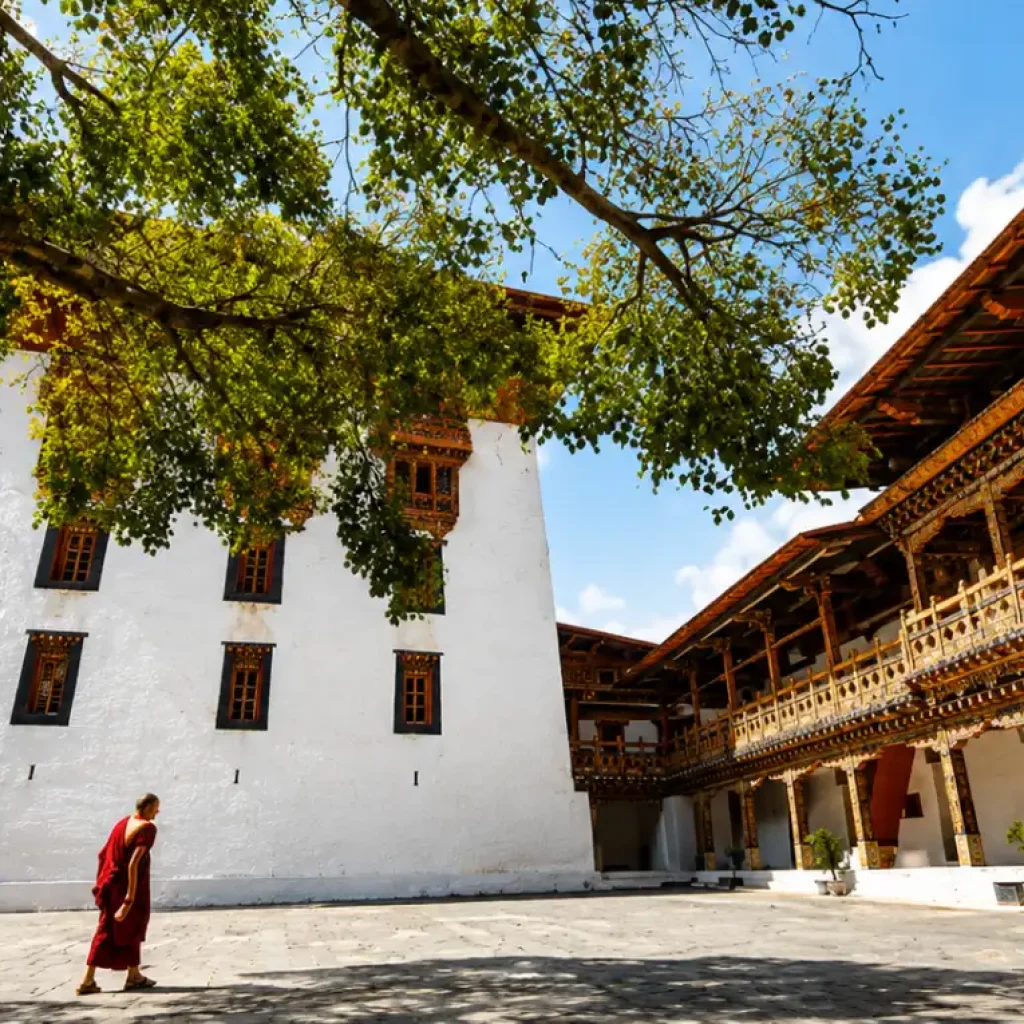
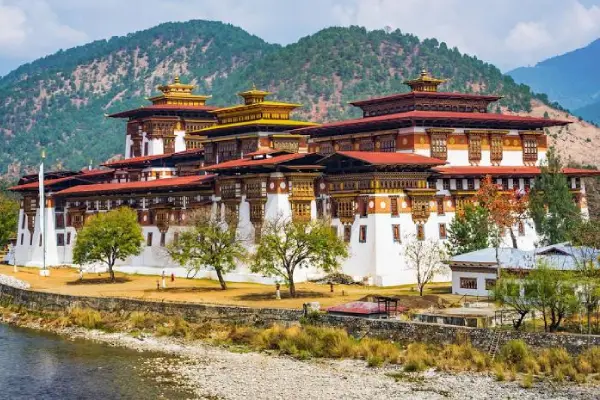
- Where the Pho Chhu and Mo Chhu rivers meet, the dzong rises like a long white breath held between two waters. Monks in maroon cross the wooden cantilever bridge in unhurried lines; inside the hundred-pillared assembly hall, the air smells of juniper smoke and old wood.
- Sit near the back during afternoon prayers. The chants arrive in low, overlapping waves — not a performance, just the day being folded into evening.
- Insider Tip : Visit in spring when the jacaranda bloom violet against the whitewashed walls — early afternoon light is kindest.
- No. 03
-
Gangtey Monastery, Phobjikha Valley
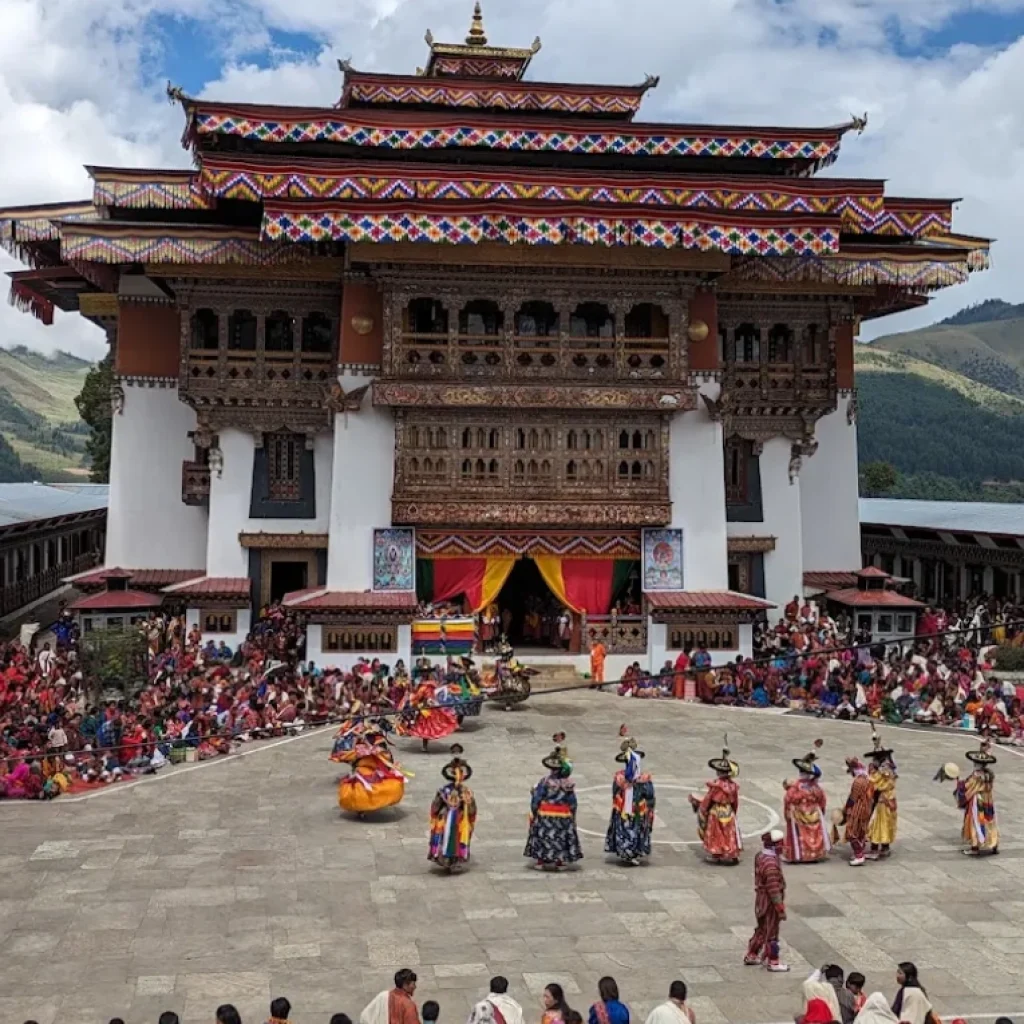
- Phobjikha is a glacial valley so wide and hushed it seems to absorb sound. Gangtey Goenpa sits above it like a witness, its inner sanctum thick with the scent of yak butter and cedar. Short guided meditation sessions can be arranged with the monks; even ten minutes here changes the shape of your breathing.
- Afterwards, walk the Gangtey Nature Trail. It is not a hike so much as a moving meditation through wildflower and pine.
- Insider Tip : Stay a night in the valley. The silence after 8 p.m. — punctuated only by black-necked cranes in winter — is the retreat.
- No. 04
-
Chimi Lhakhang — The Temple of the Divine Madman
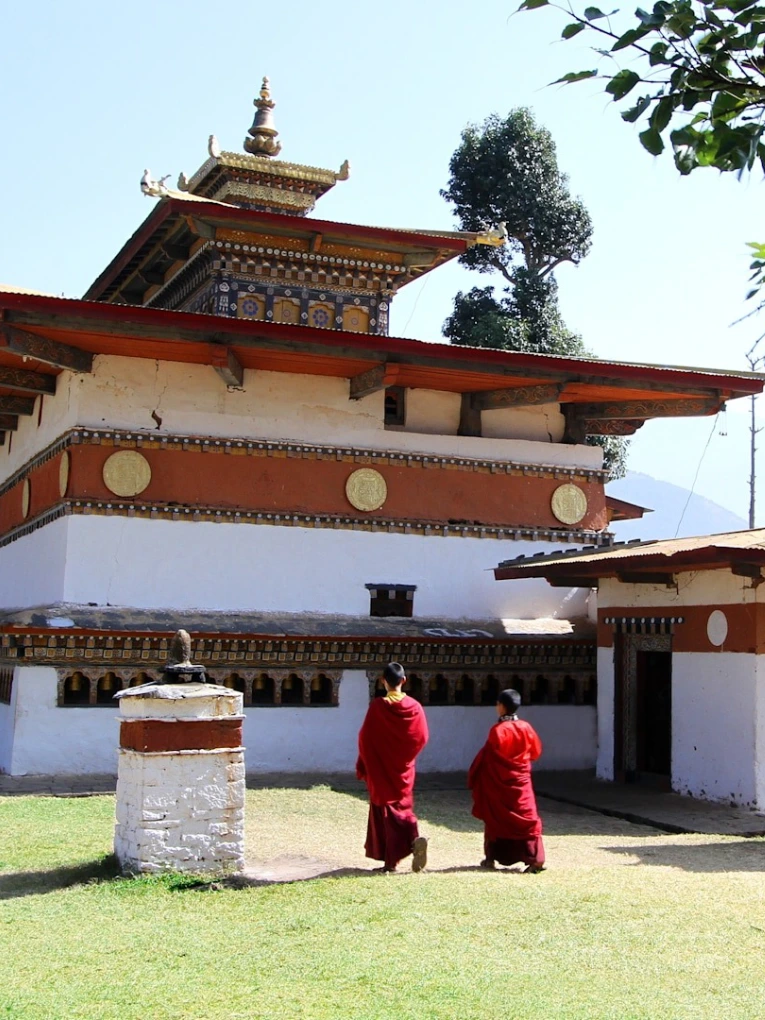
- A small yellow temple in a valley of terraced fields, built to honor the 15th-century yogi Drukpa Kunley — a saint who taught that awakening does not always wear a solemn face. Families come to be blessed for fertility; travelers come, often quietly moved, to receive a light tap on the head from a wooden relic.
- The temple is modest. What lingers is the walk back — the ordinary made suddenly sacred.
- Insider Tip : Walk the mustard-field path from Sopsokha village. The approach — flat, sunlit, unhurried — is part of the ritual.
- No. 05
-
Kila Nunnery
- Perched on a rocky face beneath Chele La Pass, Kila is home to Anim — nuns who live in tiny stone dwellings and practice in near silence. The path in is steep and lonely; arriving feels less like sightseeing and more like being received.
- A handful of guesthouses in the region can arrange short silent stays for serious practitioners. Even a single afternoon here recalibrates what you thought you needed.
- Insider Tip : Ask your guide to arrange the visit in advance. Bring a simple offering — rice, oil, tea — and stay only if invited.
- No. 06
-
Bumthang Valley — Jakar Dzong and the Sacred Sites
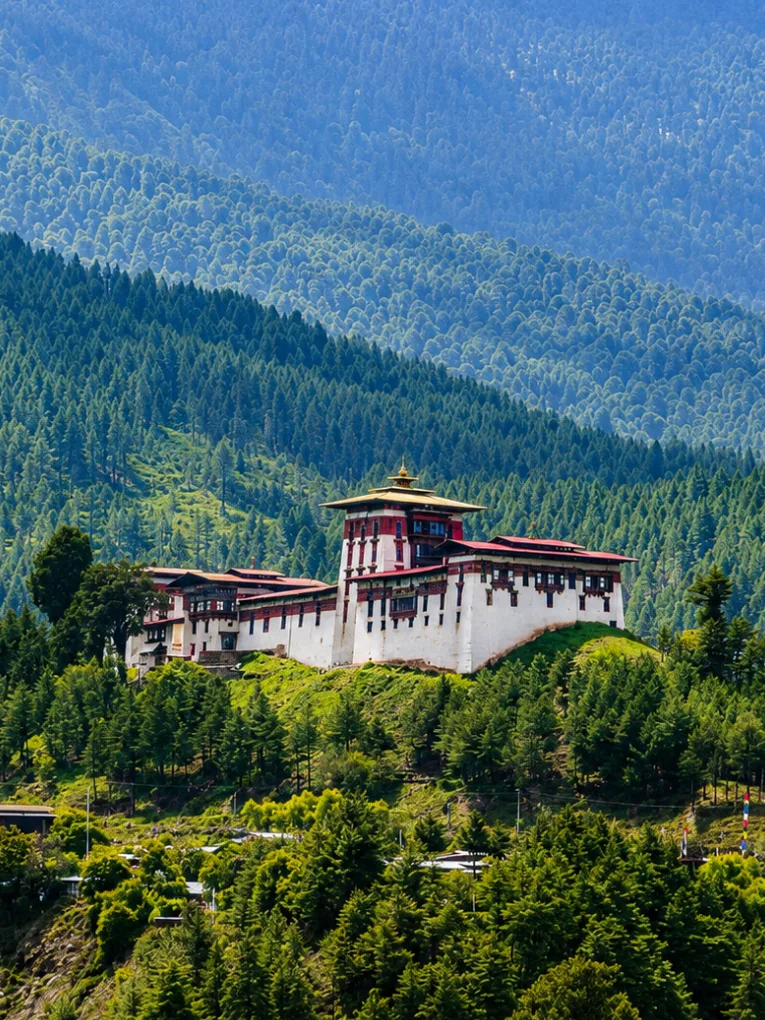
- Bumthang is often called Bhutan's spiritual heartland, and it wears the title lightly. Buckwheat fields, apple orchards, and low farmhouses give way to some of the country's oldest temples — Jambay Lhakhang, said to have been built in a single night in the 7th century, still hums with a quiet, unshowy weight.
- Walk between the sites rather than drive. The route is short, the pauses are long, and the valley teaches you how to stop counting kilometres.
- Insider Tip : Walk between Jambay Lhakhang, Kurjey Lhakhang, and Tamshing on foot. The valley is small; a car is unnecessary and diminishing.
- No. 07
-
Vipassana Meditation Centers, Thimphu
- Bhutan hosts formal Vipassana courses in the tradition of S.N. Goenka — ten days of silence, no reading, no writing, no eye contact. Simple wooden dorms, three vegetarian meals, and long sittings on a cushion in a quiet hall above Thimphu valley.
- It is difficult. It is also, for many travelers, the moment Bhutan finally lands — not as a destination, but as a way of being.
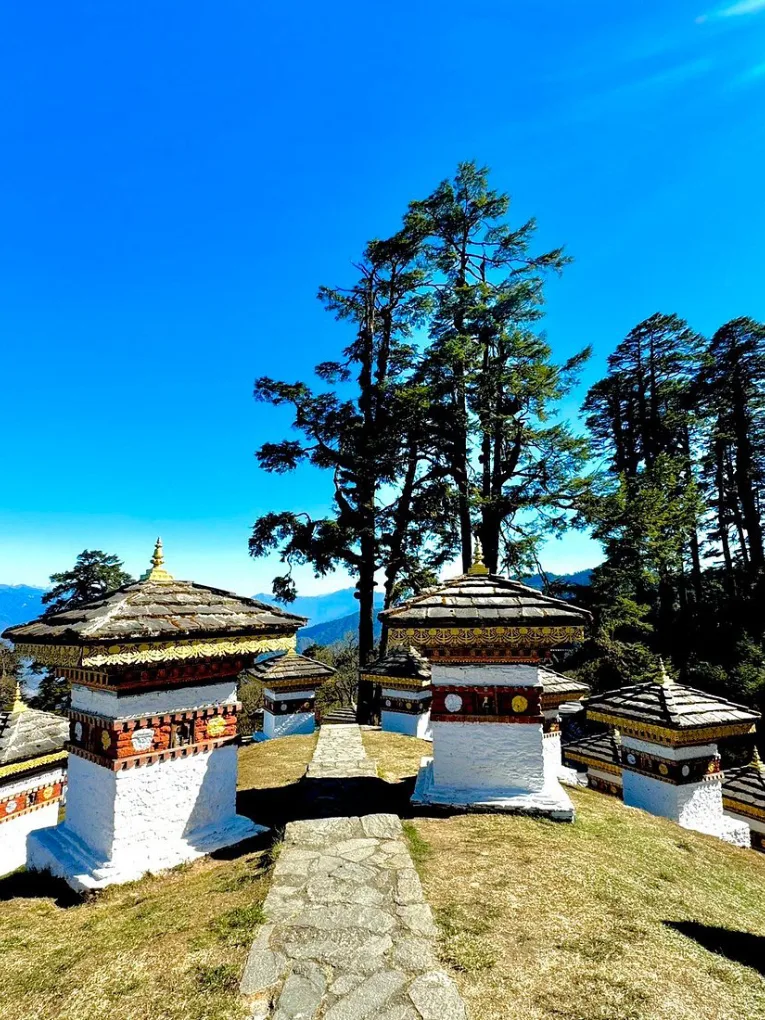
- Insider Tip : Ten-day courses require advance registration. Bring modest clothing, expect noble silence, and leave your phone at reception. The 108 chortens at Dochula Pass with Himalayan peaks in soft dawn light
- No. 08
-
Dochula Pass — The 108 Chortens
- At 3,100 metres, the wind is thin and the chortens — 108 small stupas arranged in three concentric tiers — seem to hold the sky in place. Walk clockwise around them. There is no ceremony to perform; the walking itself is the practice.
- On the clearest mornings, Gangkhar Puensum, the world's highest unclimbed mountain, appears on the horizon like a promise you don't need to keep.
- Insider Tip : Go at first light. On clear mornings the eastern Himalayas emerge in silence — a sight worth waking in the dark for.
- No. 09
-
Tango & Cheri Monasteries
- North of Thimphu, two forested trails lead to two of Bhutan's most important monastic seats. Cheri, founded in 1620, is where Bhutan's first monastic body took shape. Tango, higher and quieter, still hosts young monks in long meditation retreats — some for three years and three months.
- Short lay retreats can occasionally be arranged; even without one, an afternoon spent walking their forests is its own gentle instruction.
- Insider Tip : Both are short hikes from the road above Thimphu. Cheri is quieter; Tango houses a Buddhist university — greet monks with a soft bow.
- No. 10
-
Farmhouse Prayer Sessions — Community Hosted
- In villages across Paro, Haa, and Bumthang, families still gather in their altar rooms each evening for short household pujas. Guests are sometimes invited to sit in — quietly, on floor cushions, as the grandmother lights lamps and murmurs the practice she has kept her whole life.
- There is no monastery here, no dzong. Only a small warm room, a low chant, and the sense of having briefly been let in.
- Insider Tip : Ask your tour operator specifically for a homestay that offers evening puja. Contribute a small donation for butter lamps.
Choosing the Right Experience
The Curious First-Timer
Begin at Tiger's Nest, Punakha Dzong, and Dochula Pass. Iconic, generous, and gentle first doors into Bhutanese practice.
The Reflection Seeker
Gangtey Monastery and Bumthang Valley reward slowness — wide valleys, small temples, and the kind of quiet you can walk inside.
The Deep Practitioner
Vipassana centers in Thimphu, Tango and Cheri monasteries, and — if you can be received — Kila Nunnery above Chele La.
Etiquette in Sacred Spaces
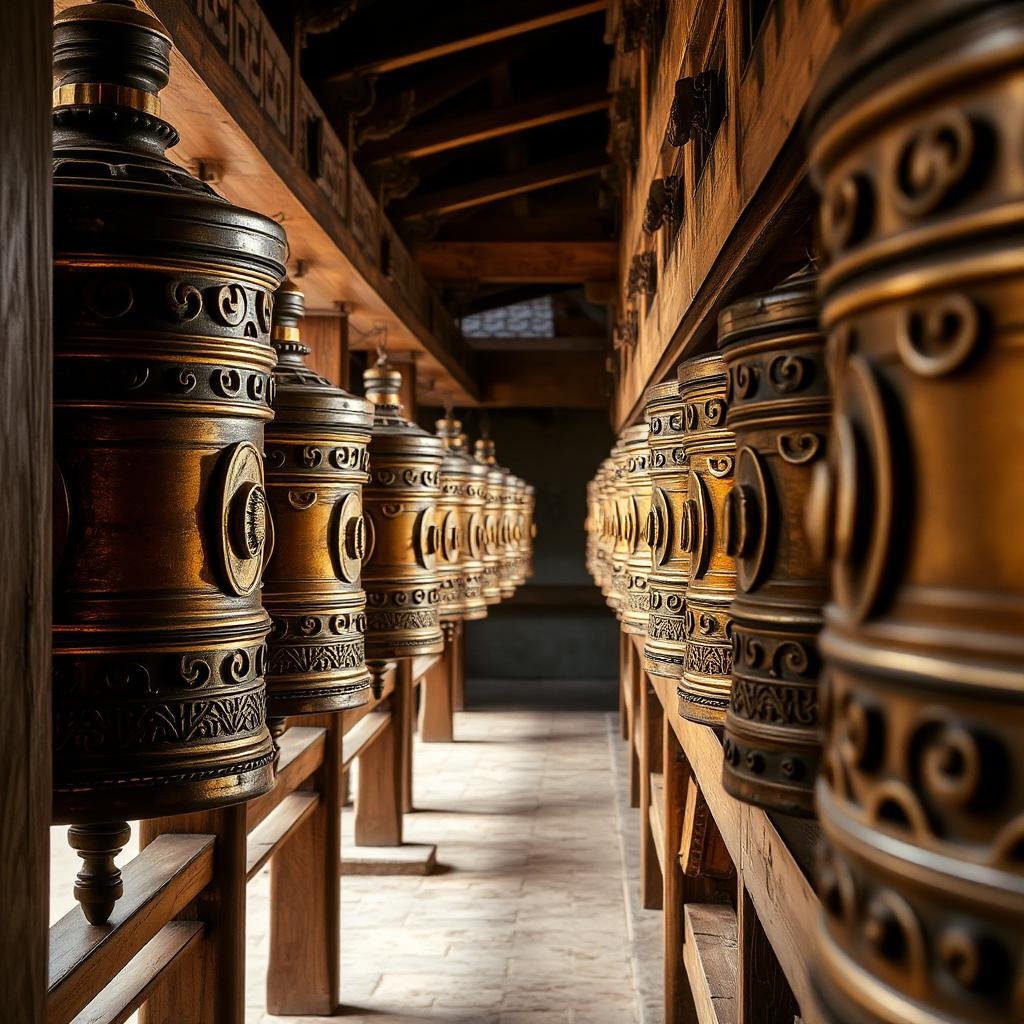
Bhutanese monasteries are not museums. They are working places of practice, and the small courtesies matter more than any language. Cover shoulders and knees. Remove shoes and hats before entering a temple. Walk clockwise around chortens, stupas, and prayer wheels — always. Photography is usually welcomed in courtyards but almost never inside altar rooms; when in doubt, don’t lift the camera.
For meditation retreats — Vipassana courses in particular — advance booking is essential, and arriving is a commitment: no phones, no reading, and noble silence for the duration. It sounds severe. It becomes, surprisingly quickly, a relief.
- Cover shoulders & knees
- Shoes off in temples
- No photos in altars
- Book retreats ahead
Read our Top Tourist Places to Visit in Bhutan guide for the must-see attractions and unforgettable experiences across Bhutan.
Planning your trip? Here’s a complete guide on how to reach Bhutan.

Comment (0)