A first-hand guide to picking the stay that shapes your entire Himalayan trip — from cliffside spas to farmhouse dinners by the bukhari.

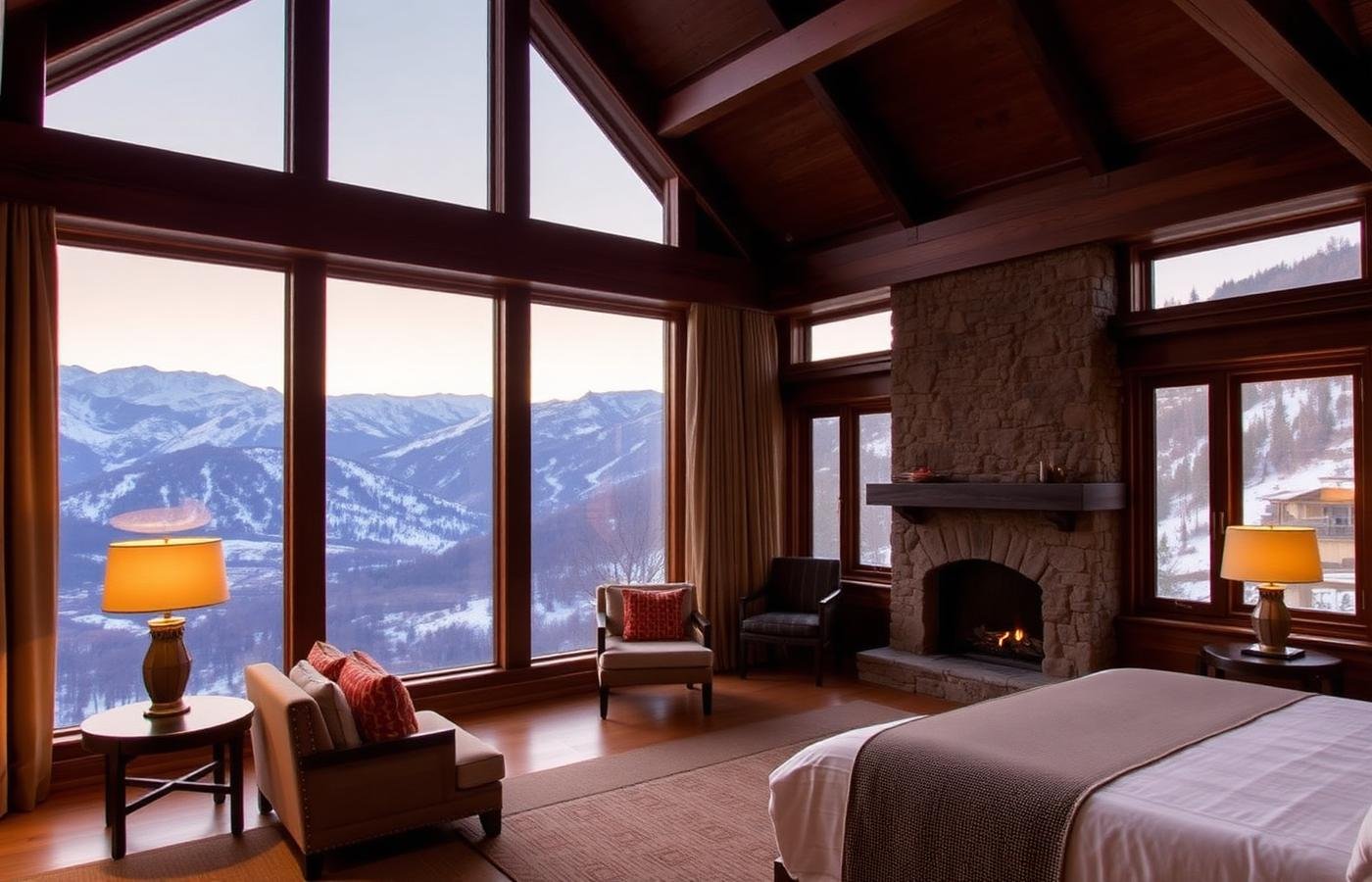
The first morning I woke up in Bhutan on my Bhutan tour, I opened the wooden shutters of a family farmhouse in Paro and watched a monk in crimson robes cross a field of buckwheat while the Himalayas turned pink behind him. The second morning, four days later, I woke in a resort suite with a stone fireplace and a copper bathtub angled at the same mountains. Both were unforgettable. Both cost wildly different amounts. And both, I realized, were the point.

Luxury Resorts
Where you stay in Bhutan doesn’t just decide how well you sleep — it decides how you experience the country. Sharing butter tea with a grandmother in Haa hits differently than sipping juniper cocktails on a spa deck in Punakha, and neither is better than the other. They’re just different doors into the same kingdom.
In this guide I’ll walk you through the three main types of Bhutan accommodation I’ve personally stayed in: luxury resortsmid-range hotels, and traditional homestays. Thanks to Bhutan’s controlled tourism model, the baseline quality across all three is genuinely high. So the real question isn’t “which is best?” — it’s “which fits the trip you actually want to take?”
Luxury Resorts

1. Luxury Resorts: For a Premium Himalayan Escape

Bhutan’s luxury scene is small, deliberate, and unlike anywhere else in Asia. A handful of operators dominate — Amankora with its five-lodge circuit across the western valleys, Six Senses Bhutan spread across Thimphu, Paro, Punakha, Gangtey and Bumthang, COMO Uma in Paro and Punakha, and grand classics like Taj Tashi in Thimphu. None of them feel like generic “international five stars” airlifted onto a mountain.
Luxury Resorts: For a Premium Himalayan Escape
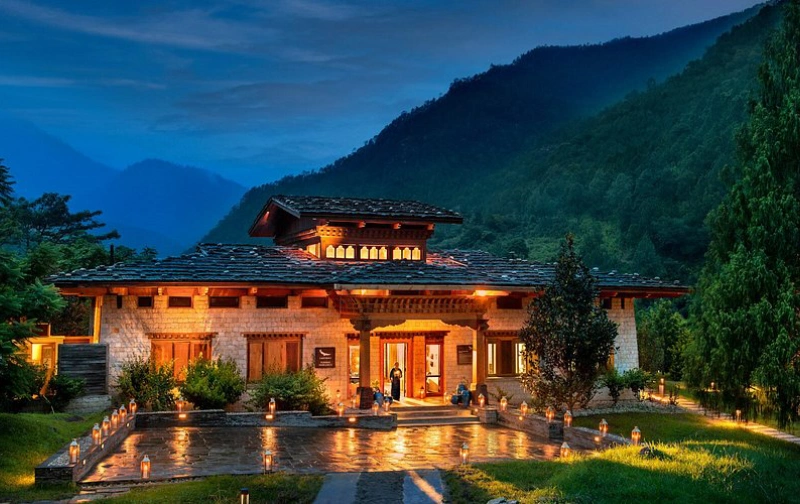
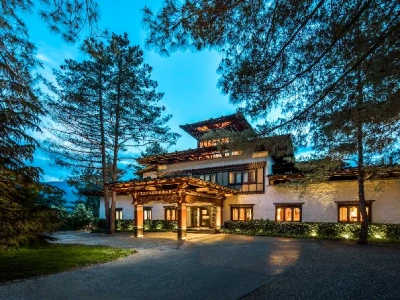
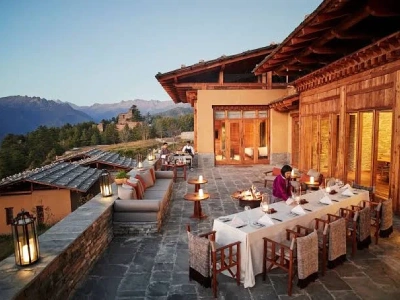
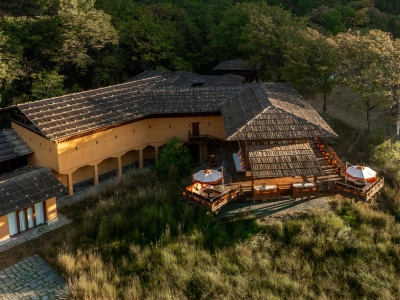
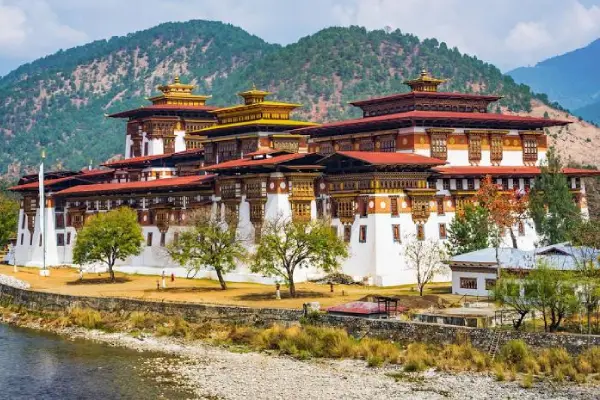
What makes Bhutanese luxury unique is how quiet it is. The architecture borrows from dzongs and monasteries — whitewashed rammed-earth walls, hand-painted timber, courtyard plans that funnel your eye toward a single valley view. Spa rituals lean on hot-stone baths using river stones and artemisia leaves, and dinner might be a private set menu of red rice, ema datshi and momos served in a candlelit farmhouse the resort has restored. Wellness here isn’t a menu — it’s the whole design brief.
Amankora
COMO Uma Paro
COMO Uma Paro
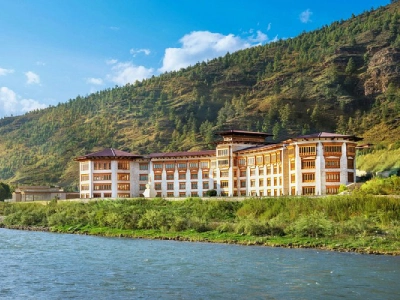
Le Méridien Paro, Riverfront
Not sure which destinations to include?
Read our Top Tourist Places to Visit in Bhutan guide for the must-see attractions and unforgettable experiences across Bhutan.
Insider tip

If you can only splurge on one night, book the Paro lodge closest to Tiger’s Nest. You can hike the monastery at dawn, then be back in a cedar hot tub by lunch — a sequence no other stay in Bhutan quite matches.

2. Mid-Range Hotels: Comfort Without the Splurge

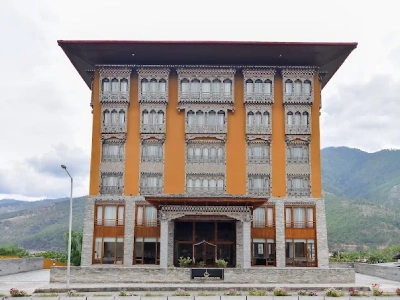
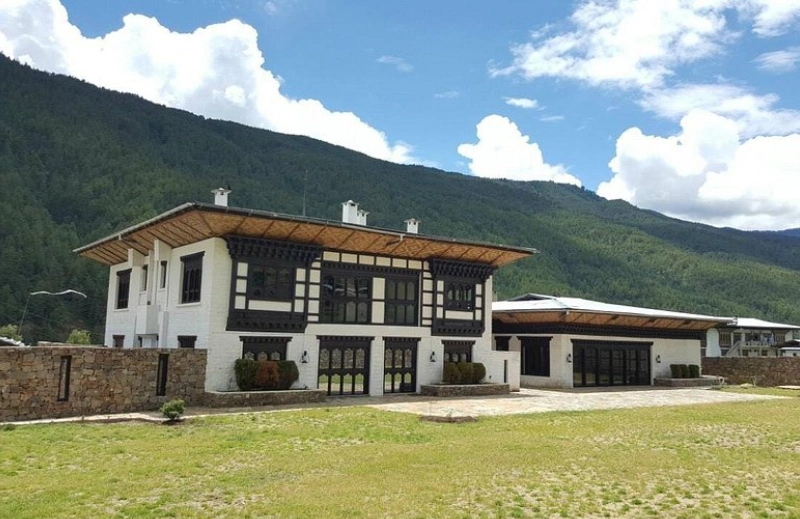
This is where most first-time visitors to Bhutan actually sleep — and honestly, it’s a sweet spot. Thimphu, Paro and Punakha all have well-run three- and four-star hotels that punch far above what the price tag suggests. Think Hotel Druk and Osel in Thimphu, Zhiwa Ling Ascent and Tenzinling in Paro, and Dhensa or Meri Puensum in the Punakha valley.
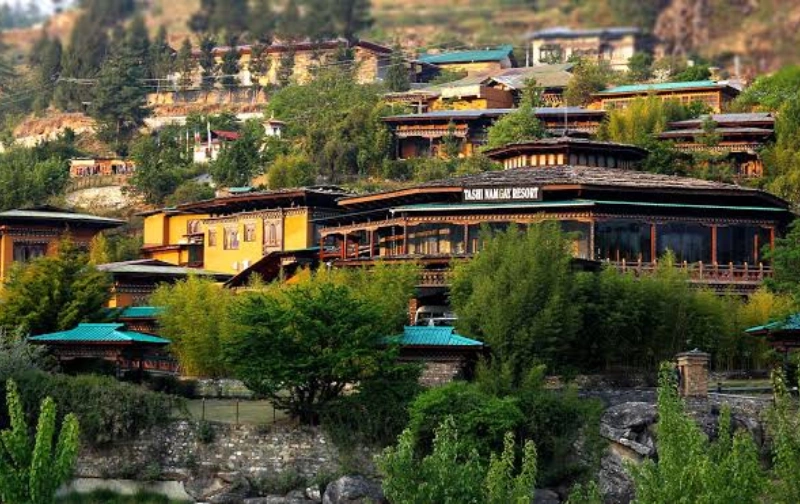
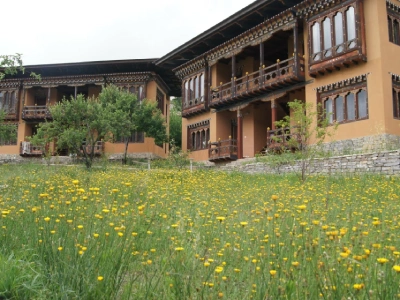
Tashi Namgay Resort
The rooms are clean and warm, often with underfloor heating and a small balcony over rice terraces. Bathrooms have proper hot water (never a given at altitude). The dining rooms lean bilingual — a Bhutanese buffet on one side, “continental” dishes like pasta and pancakes on the other, which is genuinely helpful if you’re traveling with kids or picky eaters not yet ready to face chilies for breakfast.
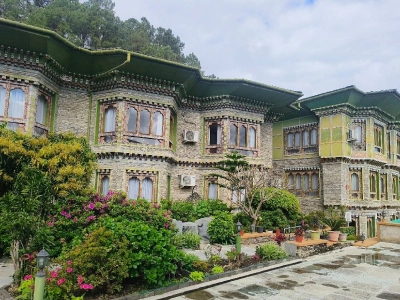
Norkhil Boutique Hotel & Spa
RKPO Green Resort
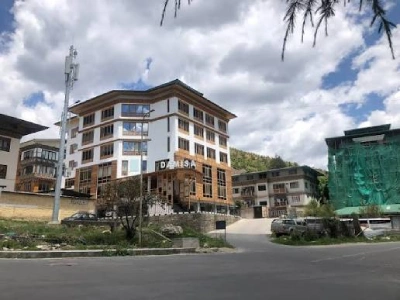
Hotel Damisa
Hotel Damisa
Kichu Resort
Insider tip

Because Bhutan requires most travelers to book through a licensed tour operator, your guide usually has pre-negotiated hotel rates. Ask them to swap you into a higher room category at the same property — a valley-view upgrade often costs the operator almost nothing but transforms your morning.

Planning your trip? Here’s a complete guide on how to reach Bhutan.

3. Homestays: The Most Authentic Bhutanese Experience

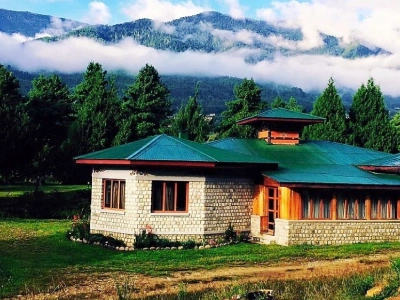
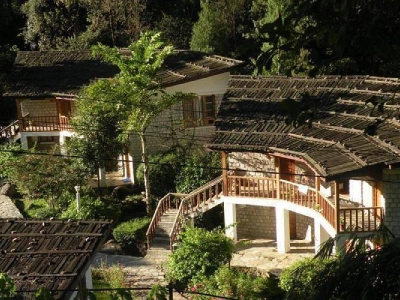
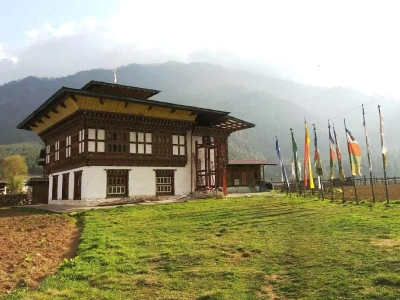
My favorite nights in Bhutan were the ones I paid the least for. Homestays are exactly what they sound like — you sleep in a rural family’s actual farmhouse, usually in a simple upstairs room with a foam mattress, thick wool blankets and shared bathrooms. The best clusters I’ve stayed in are in Haa ValleyPhobjikha (Gangtey) and Bumthang.
Dinner is whatever the family is having: ema datshi so fiery it clears your sinuses, red rice from the field outside, kewa datshi with potato, and if you’re lucky, a fermented cheese soup called suja. You eat cross-legged near the bukhari — a squat iron wood stove that anchors every farmhouse living room — while the grandmother spins a prayer wheel in the corner and the kids practice their English on you. It is, without exaggeration, the warmest hospitality I’ve encountered anywhere in Asia.
Dangchu Resort & Homestay
Phobjikha Homestay
Hotel Damisa
Hotel Damisa
Norkhil Boutique Hotel & Spa
Insider tip
Book a Phobjikha Valley homestay between late October and mid-February. That’s when the endangered black-necked cranes migrate down from Tibet, and you can watch them circle the valley at dawn from the farmhouse porch — no tripods, no crowds, just steam rising off your tea.

4. How to Choose the Right Stay for Your Trip

After a few visits, I stopped agonizing over booking sites and started asking one simple question: what kind of memory am I trying to bring home? That usually answers it.
Here’s the thing most first-time visitors miss: you don’t have to pick one. The itinerary I now recommend to friends is a hybrid — two nights in a Paro resort to acclimatize and hike Tiger’s Nest in comfort, two nights in a Phobjikha homestay to slow down and see rural Bhutan, then a mid-range hotel in Thimphu to shop, eat and fly out rested. Your tour operator can stitch this together easily; almost no one refuses.

5. Booking Tips & Practical Advice

Bhutan is not a “book it on Expedia” destination. As you’ll learn in this Bhutan travel guide, with the exception of Indian, Bangladeshi, and Maldivian passport holders, every international visitor must travel on a Bhutan package arranged through a licensed Bhutanese tour operator, which handles your visa, guide, driver, and your hotels. This is tied to the Sustainable Development Fee (SDF), currently USD $100 (approximately ₹8,700) per adult per night for most travelers.
In most countries, your hotel is a base camp. In Bhutan, it’s part of the story. The resort teaches you how the country wants to be seen; the mid-range hotel shows you how it works day to day; the homestay lets you in on how it actually lives. Pick the mix that matches the trip you want — not the one your budget nudges you toward by default. If you take away one thing from this guide, let it be this: don’t book by star rating. Book by the memory you want to bring home. Bhutan will meet you halfway either way.
Compare the Best Hotels in Bhutan
Hotel Category Price/Night Best For
COMO Uma Paro Luxury ⭐⭐⭐⭐⭐ ₹45,000+ Honeymoon
Zhiwa Ling Heritage Heritage ₹22,000+ Couples
Dhensa Boutique Resort Boutique ₹18,000+ Nature
Gangtey Lodge Luxury ₹55,000+ Scenic Stay
Farm Homestays Budget ₹2,500+ Local Experience
here to Stay in Bhutan:

Best Time to Visit Bhutan

Bhutan is beautiful all year, but each season has its own mood. Here is a quick comparison to help you plan.
Season Weather Highlights Recommended For
Spring (Mar–May) 10–22°C, blooming Rhododendrons, Paro Tshechu First-timers, honeymooners
Summer (Jun–Aug) 15–25°C, monsoon Lush green valleys, fewer tourists Budget travellers
Autumn (Sep–Nov) 8–20°C, clear skies Thimphu Festival, Himalayan views Photographers, trekkers
Winter (Dec–Feb) -5 to 12°C, sunny cold Black-necked cranes, low crowd Solitude seekers

Best Things to Do

Craving a hot stone bath after a mountain hike?

We know the best family-run farmstays where the water is fresh and the hospitality is warmer.

Discover the Beauty of Bhutam

Bhutan Honeymoon Package 7 Nights 8 Days

Bhutan Honeymoon Tour Package 6 Nights 7 Days

Want this itinerary tailored to your dates?

Share your travel window and we will send you a personalised plan within 24 hours.

Travel Tips: Before You Go

Packing
Layers, layers, layers. Even in summer, nights are cold. Comfy trekking shoes are non-negotiable.
Permit
Indians don’t need a visa but do need an entry permit. Get it online or at Paro airport / Phuentsholing.
Currency
Ngultrum (BTN) = INR 1:1. INR is accepted everywhere except ₹500 and ₹2000 notes — carry ₹100s.
Packing
Buy a Bhutan Telecom or TashiCell SIM at the airport. Wi-Fi in hotels is decent, mobile data is patchy in valleys.
Safety
Bhutan is one of the safest countries in the world. Solo female travellers report feeling very comfortable.
Responsible Tourism
No single-use plastic. Don’t touch prayer flags. Ask before photographing monks and locals.

Things travellers actually ask

For most nationalities, no. Bhutan requires you to travel on a package arranged by a licensed local tour operator, who books your accommodation for you. Indian, Bangladeshi and Maldivian passport holders can book hotels independently, though many still use an operator for convenience.
Usually yes — most reputable operators will happily swap one or two hotel nights for a homestay in Haa, Phobjikha or Bumthang if you ask. Just flag it before they lock your itinerary; adding it later is harder because rural homestays have limited beds.
Expect USD $800 to $2,500+ per night, all-inclusive of meals, guided activities and often airport transfers. Aman and Six Senses sit at the upper end; COMO Uma and Taj Tashi are more accessible entry points into the luxury tier.
In Thimphu and Paro hotels, generally yes. In resorts, yes but sometimes slow. In rural homestays and remote valleys like Phobjikha, expect patchy or no Wi-Fi — consider it part of the experience and buy a local Tashi Cell or B-Mobile SIM as backup.