
What's Inside This Guide
The first time I flew into Paro, I actually gasped out loud. One moment the plane was threading between brown ridges close enough to count the pines, the next it banked hard, dipped a wing toward a monastery on a cliff, and dropped into a valley so green and quiet it felt like the aircraft had accidentally time-traveled. That’s Bhutan for you. Getting here isn’t as breezy as booking a weekend in Bangkok — but it’s genuinely part of the story.
Most people reach Bhutan one of two ways: flying into Paro International Airport, or crossing overland from India. Neither is “difficult” once you know how the pieces fit — the visa, the permits, the Sustainable Development Fee, the airline choices.If you’d rather skip the planning, our Bhutan Tour Packages take care of everything—from permits and hotels to transport and guided sightseeing—so you can simply enjoy the journey. This guide walks you through both routes exactly the way I’d explain it to a friend over chai, plus the small details that make the journey smoother.
By Air: Flying Into Bhutan
Paro International Airport (PBH) sits at 7,300 ft, squeezed into a narrow valley ringed by 18,000 ft peaks. Only a handful of pilots in the world are certified to land here, and once you’ve watched a wingtip clear a hillside by what feels like an arm’s length, you’ll understand why. It also means only two airlines operate scheduled flights:
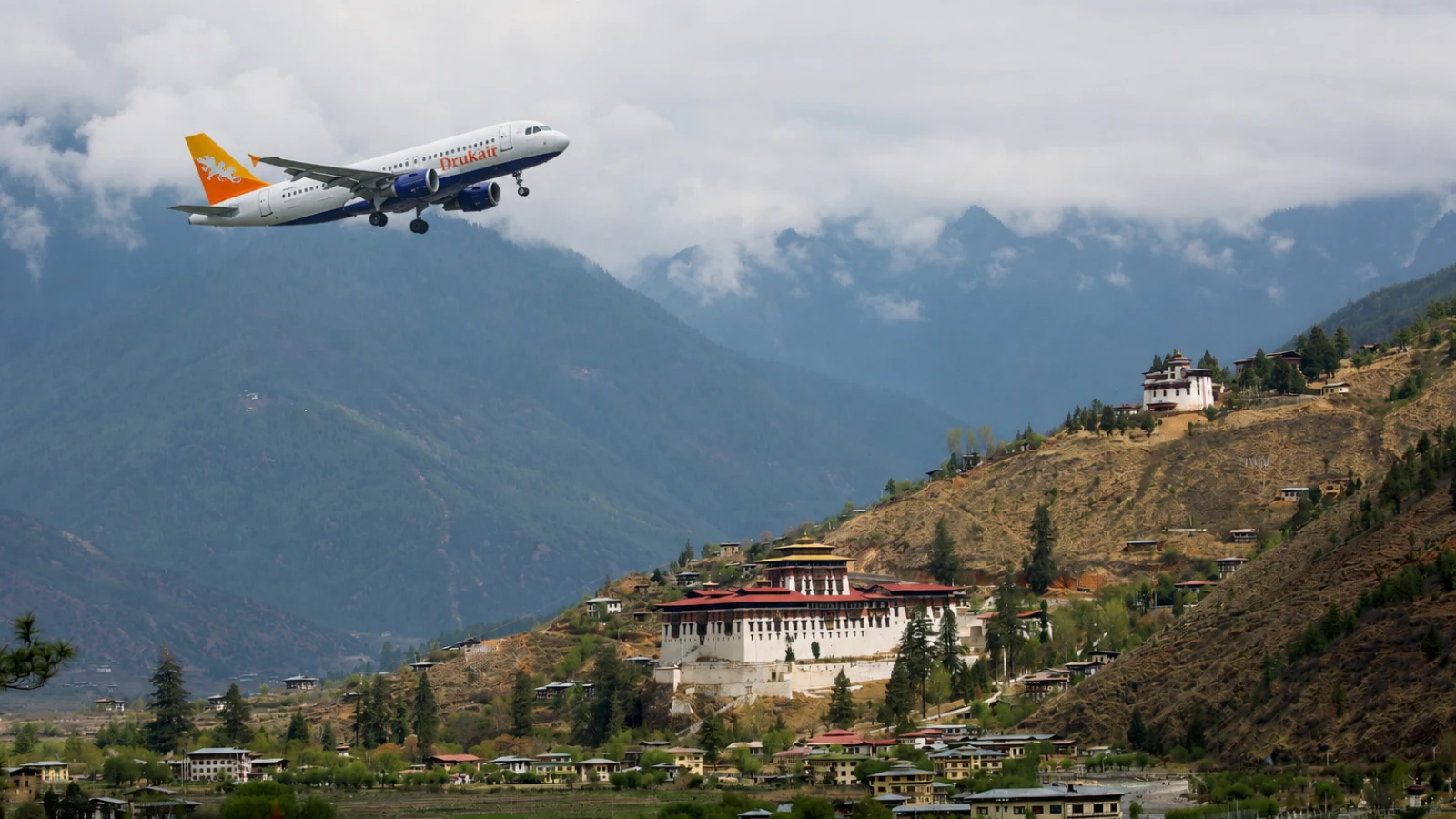
- Drukair — Royal Bhutan Airlines, the national carrier.
- Bhutan Airlines— the private alternative, often slightly cheaper.
- Between them, they connect Paro with a small but useful set of cities:
- India: Delhi, Kolkata, Bagdogra, Guwahati, Mumbai (seasonal)
- Southeast Asia: Bangkok, Singapore
- Neighbors: Kathmandu, Dhaka
- Flight times are short — Delhi is about 2h 30m, Kolkata roughly 1h, Bagdogra a quick 40 minutes, Bangkok around 3h 30m. Return fares swing wildly with season: expect roughly ₹18,000–₹35,000 (US$220–$420) from Indian metros and US$450–$700 from Bangkok or Singapore. Book early for spring and autumn — the good windows sell out weeks in advance.
- On the Kathmandu–Paro leg, request a left-side window seat. On a clear morning you'll see Everest, Makalu, Kanchenjunga, and Jomolhari lined up like a Himalayan hall of fame. Bring a real camera; phone photos through the scratched cabin window never quite do it justice.
The terminal itself is charming — hand-painted wooden facades, no glass towers, no aggressive duty-free maze. You’ll clear immigration in twenty minutes and step outside straight into pine-scented mountain air. Paro town is a 15-minute drive; Thimphu is about an hour.
Explore our complete guide to the best hotels, luxury resorts, and authentic homestays in Bhutan to find the perfect accommodation for your trip: Where to Stay in Bhutan: Best Hotels, Resorts & Homestays
By Train: Reaching Bhutan via Indian Railways
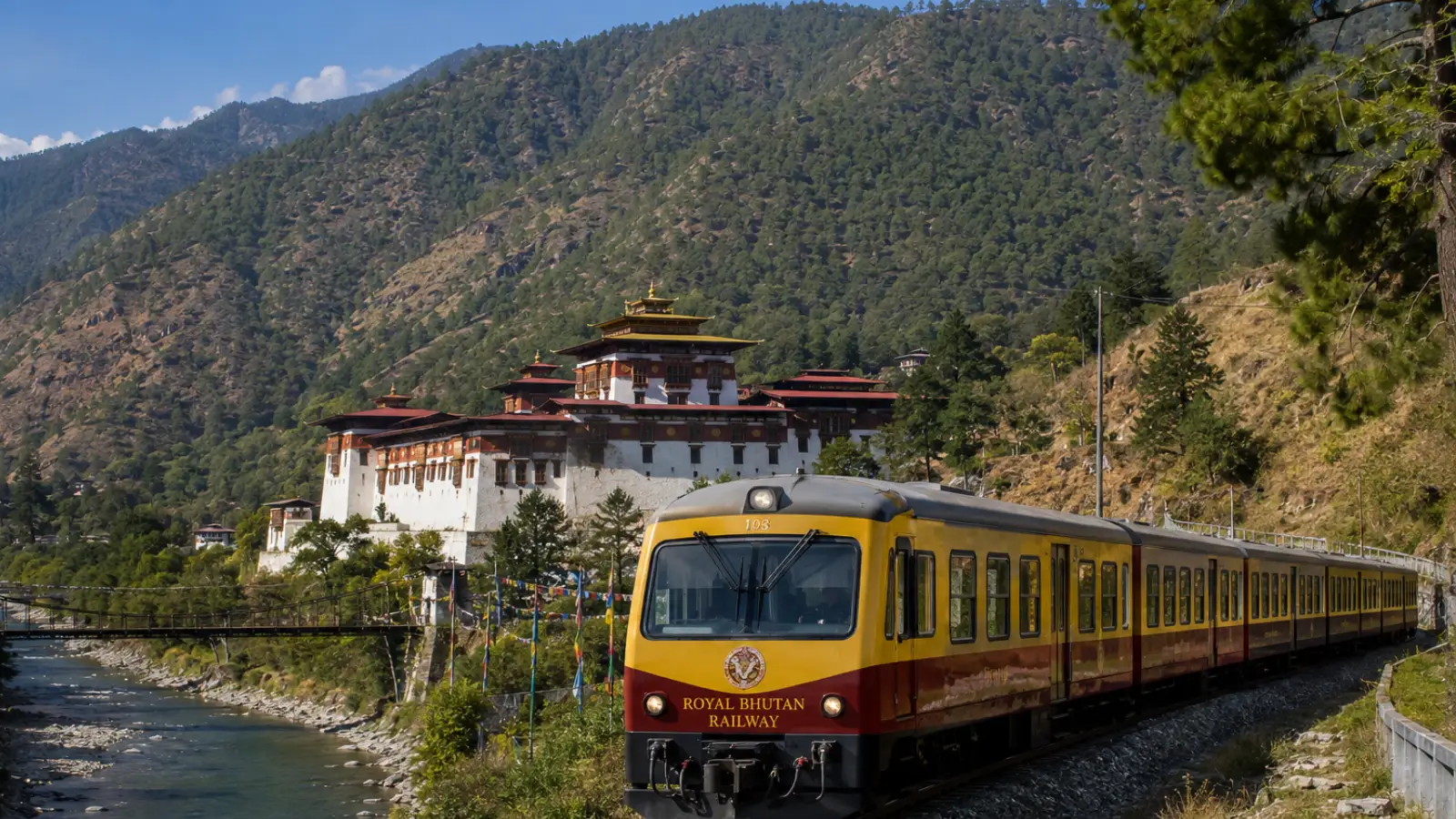
Bhutan has no railway network, so you cannot travel directly into the country by train. The easiest option is to take a train to one of the nearby railway stations in India and continue by taxi or bus to the Bhutan border.
-
Best Railway Stations Near Bhutan
- Hasimara (West Bengal) – Quieter, useful if you're coming from central Assam or Kaziranga.
- New Jalpaiguri (NJP), Siliguri – Around 150 km from Phuentsholing (4–5 hours by road). NJP is one of the best-connected railway stations in eastern India, with direct trains from Delhi, Kolkata, Guwahati, Mumbai, Chennai, and other major cities.
- Alipurduar Junction – Approximately 60 km from the border, offering another convenient option with regular taxi services to Phuentsholing.
- Once you arrive at any of these stations, you can hire a private taxi or board a shared cab or bus to Phuentsholing, Bhutan's busiest land entry point.
Approximate Travel Time
| Route | Duration |
|---|---|
| Hasimara → Phuentsholing | 30 Minutes |
| NJP → Phuentsholing | 4–5 Hours |
| Alipurduar → Phuentsholing | 1.5–2 Hours |
- From Phuentsholing to Thimphu is around 170 km but plan for 6 hours — the road climbs from 300 m to 2,300 m through switchbacks, waterfalls, and fog-drenched pine forest. Shared taxis and prepaid cabs are easy to find; the Bhutan Post bus is cheapest if you're not in a hurry.
By Road: Entering via India
- There are three official land borders into Bhutan, all from India:
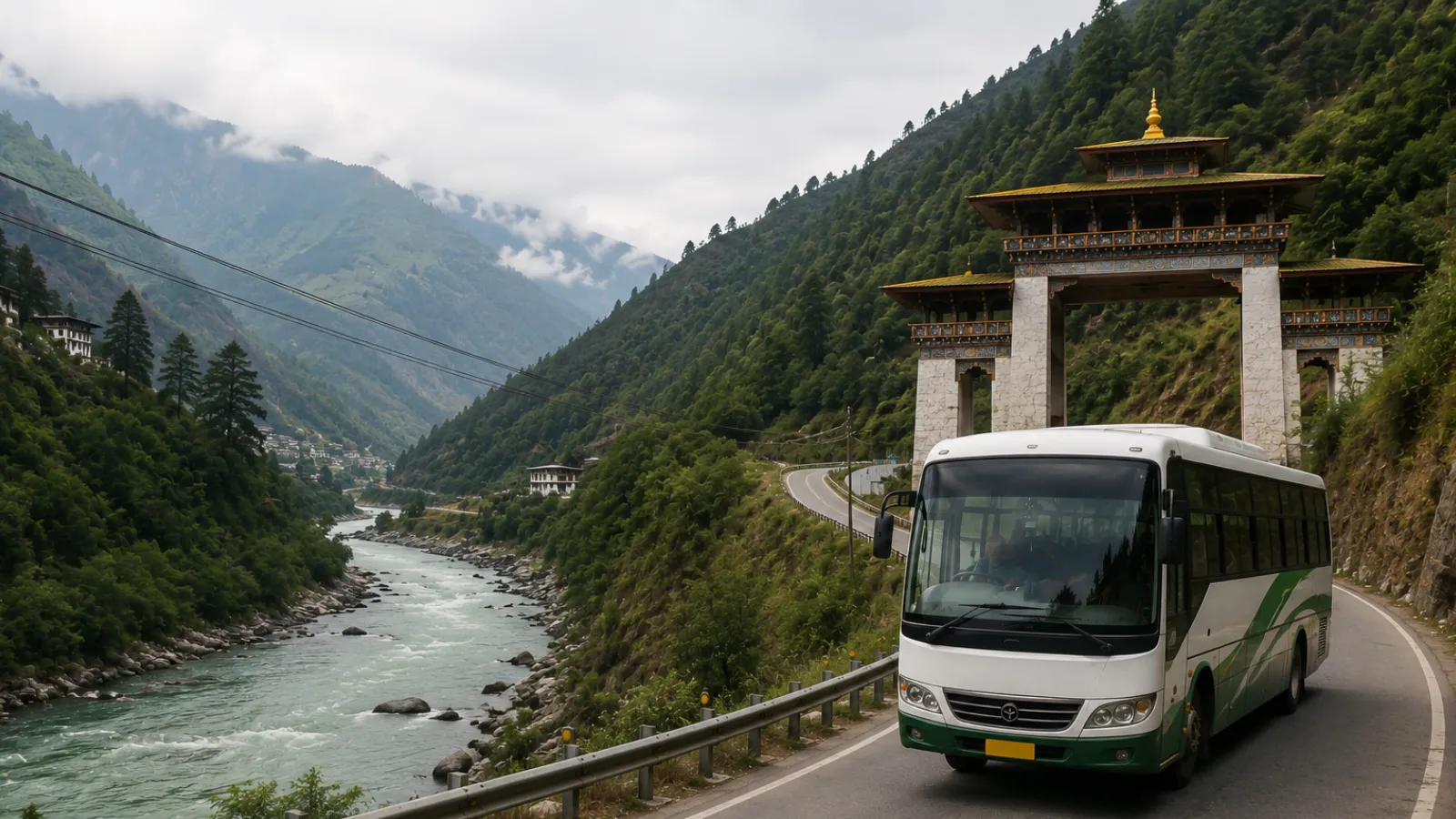
- Phuentsholing (from West Bengal) — the main gateway, ~170 km from Bagdogra airport / Siliguri, roughly a 4–5 hour drive.
- Gelephu (from Assam) — quieter, useful if you're coming from central Assam or Kaziranga.
- Samdrup Jongkhar (from Assam) — the far eastern entry, ideal if you're finishing a Northeast India loop and want to exit through east Bhutan.
- Phuentsholing is where most road travelers cross, and the contrast at the border is genuinely surreal. On the Indian side, Jaigaon is chaos in the best Indian tradition — honking trucks, tangled wires, vendors yelling over Bollywood remixes. Walk 30 seconds under the Bhutan Gate and suddenly the traffic moves in orderly lines, no one leans on a horn, and the shopkeepers are wearing gho and kira. It's like stepping through a portal. For Indian nationals, this crossing is refreshingly simple: no visa required. You just need either a valid passport (min. 6 months) or a Voter ID card, plus two passport photos. You'll get a free entry permit from the Immigration Office right next to the gate.
- Cross the border between 9:30 and 11:00 AM on a weekday. The immigration office opens at 9, the early rush clears by 9:30, and lunch-hour queues haven't built up yet. Avoid Saturdays — half of Jaigaon seems to be crossing over to shop.
From Phuentsholing to Thimphu is around 170 km but plan for 6 hours — the road climbs from 300 m to 2,300 m through switchbacks, waterfalls, and fog-drenched pine forest. Shared taxis and prepaid cabs are easy to find; the Bhutan Post bus is cheapest if you’re not in a hurry.
Perfect Tip : First-time visitors, honeymooners, photographers, trekkers, and luxury travelers looking to experience Bhutan’s most beautiful season with ideal weather and unforgettable Himalayan scenery. This Bhutan Travel Guide helps you choose the perfect season for an unforgettable journey through the Land of the Thunder Dragon.
| Mode | Best For | Entry Point | Travel Time | Approx. Cost |
|---|---|---|---|---|
| Air | Fastest & Most Comfortable | Paro International Airport | 40 min–3.5 hrs | ₹18,000–₹35,000+ |
| Train | Budget Travellers | Hasimara / NJP / Alipurduar | 30 min–5 hrs (Road Transfer) | Train Fare + Taxi |
| Road | Flexible & Scenic | Phuentsholing, Gelephu, Samdrup Jongkhar | 4–6 hrs | Taxi / Bus |
Which Route Should You Choose?
- Quick decision framework, based on where you're starting:
✈️ Delhi / Kolkata / Short Trip
Fly directly to Paro. You'll spend less time in transit than the drive from Bagdogra alone.
🚗 Budget Road-Tripper
Fly into Bagdogra, cross at Phuentsholing. Cheapest option, and the drive up is unforgettable.
🗺️ Northeast India Combo
Pair Kaziranga or Tawang with Bhutan via Gelephu or Samdrup Jongkhar.
❤️ The Romantic Combo
Fly in, road out (or vice versa). You get the aerial reveal and the slow-earned descent.
Personally, my favorite is flying in and driving out. The arrival by air is jaw-dropping, and leaving overland gives you a final slow look at the country as you unwind from mountain calm back into Indian energy. It feels like a proper goodbye.
Visa & Permit Requirements
Foreign visitors apply online in advance; Indians can walk up and get a permit at the border.
-
Foreign nationals (most passports)
- Apply for an e-visa online through the official Bhutan Department of Immigration portal. You'll need to upload a passport scan and a recent passport-size photo, provide your travel itinerary, and pay the visa fee (approximately ₹3,500–₹3,700) along with your Sustainable Development Fee (SDF) in advance. Visa applications are typically processed within 5 working days. Since 2022, independent travel has been permitted, so booking through a licensed tour operator is no longer mandatory.
-
Indian, Bangladeshi & Maldivian nationals
- No visa. Just an entry permit issued on arrival (free for Bhutan, but the SDF still applies, at a lower rate). Bring passport or Voter ID, two photos, and a copy of your hotel booking.
-
The Sustainable Development Fee (SDF)
- This is Bhutan's famous "high-value, low-impact" tourism policy in action. The Sustainable Development Fee (SDF) is currently ₹8,700 per adult per night (approximately US$100) for most foreign nationals, while Indian citizens pay ₹1,200 per person per night. The revenue helps fund Bhutan's free healthcare, education, environmental conservation, and cultural preservation—meaning your contribution directly supports the country's sustainable development while you enjoy its pristine landscapes and unique heritage.
- Once you're inside Bhutan, if you want to travel beyond Thimphu and Paro (Punakha, Bumthang, Phobjikha, etc.) you'll need a route permit, issued free at the Immigration Office in Thimphu. Your hotel or driver usually handles this in an hour.
Discover the Beauty of Bhutam


Bhutan Honeymoon Package 7 Nights 8 Days
12 Reviews
7 Nights 8 Days
from
$40.000,00
Bhutan Honeymoon Tour Package 6 Nights 7 Days
10 Reviews
6 Nights 7 Days
from
$0,00
Best Time to Travel & Practical Tips
- Bhutan has two clearly dominant seasons for visitors:
- Spring (March–May): Rhododendrons in bloom, mild days, the legendary Paro Tshechu in late March or early April.
- Autumn (September–November): Crystal-clear mountain views, harvest color, and the huge Thimphu Tshechu in September–October.
- Everything else worth knowing, in bullets:
- Currency: Ngultrum (Nu), pegged 1:1 with the Indian Rupee. INR notes up to ₹100 are widely accepted; carry small denominations.
- Connectivity: Pick up a local TashiCell or B-Mobile SIM at the airport for a few hundred rupees — 4G is decent in towns, patchy in valleys.
- Packing: Layers, a proper rain shell, decent hiking shoes if you plan to trek to Tiger's Nest, and modest clothing for temples (long pants, covered shoulders).
- Etiquette: Remove shoes and hats at temples, walk clockwise around stupas and prayer wheels, and please don't point at religious icons.
- Cash: ATMs work in Thimphu and Paro but can be unreliable; carry backup cash.
For a complete overview of Bhutan’s famous sightseeing spots and offbeat destinations, check out our comprehensive Bhutan tourist places guide.
- Final Thoughts :
- Reaching Bhutan is its own miniature adventure — a plane ride that feels closer to flying than any other, or a slow drive up out of the plains into pine and prayer flags. Either way, by the time you're standing in front of Tiger's Nest with the wind at your back, the paperwork and the border queues have already faded into a story you'll tell for years. Pick your route, book your window seat (left side, remember), and start planning. Bhutan is waiting on the other side of the mountains.
Want this itinerary tailored to your dates?
Share your travel window and we will send you a personalised plan within 24 hours.
Things travellers actually ask
No. Indian nationals only need a passport or Voter ID card plus a free entry permit issued on arrival at Paro airport or the Phuentsholing border. The SDF (₹1,200 per adult per night) still applies.
Flying saves a full day and gives you an unforgettable Himalayan approach. Driving in via Phuentsholing is cheaper, slower, and more scenic. If time allows, do one each way.
US$100 per adult per night for most foreign nationals and ₹1,200 per night for Indian citizens, with reductions for children. It funds free healthcare, education, and conservation.
Yes. Foreign nationals with an approved e-visa can enter overland at Phuentsholing, Gelephu, or Samdrup Jongkhar — same paperwork as flying in.
It can be, particularly in higher-altitude areas like Paro and Thimphu, where nights regularly drop below freezing. However, daytime skies are typically clear and sunny, and lower-lying areas like Punakha remain milder.

Comment (0)